
Check the location before trusting the listing
A practical guide to interpreting Melbourne venue listings, opening-hour labels, payout claims and the boundary between online and land-based play.
Pokies Near Melbourne Airport and Other Key Locations
A location label is a starting point, not proof that a venue is inside a landmark or immediately beside it. Results associated with Melbourne Airport, Melbourne Central or Port Melbourne may refer to different kinds of places: a venue at the landmark, one in the surrounding area, or a listing whose wording simply includes the location. Those distinctions matter when the purpose is to understand where a venue is, rather than to rely on a broad map label.
For Melbourne Airport, “near” can describe a substantial area. A result connected with the airport may be outside the terminal precinct or elsewhere in the surrounding district. A map pin alone does not establish whether a venue is within the airport, how it is accessed, or whether the displayed point represents the entrance. The listing should be checked for a complete street address and then compared with the airport location on a map. If the address is missing, unclear or inconsistent across listings, the precise relationship to the airport remains uncertain.
The same distinction applies to searches for pokies at Melbourne Airport. Wording that appears to place a venue inside the airport does not establish that it is on airport property. A result may use the airport as a nearby reference point, or the map service may group surrounding locations under a broad area label. The address, map pin and venue’s own description need to agree before the location can be treated as clear. A search result title is not an address.
Melbourne Central calls for a similarly careful reading. A venue described as being near Melbourne Central may be in the wider central area rather than within the shopping and transport complex itself. Check whether the listed address identifies a specific place and whether the pin corresponds to that address. If a result uses “Melbourne Central” as a general location tag but does not provide a precise address, it cannot establish how close the venue is to the landmark.
 Pokies in New South Wales: Hours, Access and SearchesThere is no single NSW opening time for pokies; learn what venue hours, online access, machine counts and location searches can—and can’t—confirm.
 Brisbane Casino Stays: What Listings Can ConfirmLearn how to distinguish casino-run hotels, packages and independent bookings; the available text does not verify Brisbane rates or inclusions.
Port Melbourne is a suburb name, not a single point. A result labelled with Port Melbourne may be somewhere within that area, and the label by itself says little about the journey from a particular starting point. The street address is more useful than the suburb tag: it allows the location to be compared with the intended destination without treating all of Port Melbourne as one spot.
For travel planning, distance should be assessed as a route, not just as a number shown between map pins. A straight-line measurement does not describe the streets or access route between two places. Likewise, a listing’s use of “near” does not set a consistent distance. The practical meaning depends on the starting point, the destination entrance and the route available. When those details are not specified, claims of closeness are difficult to compare.
Map results can also differ in how they label a place, where they position its pin and whether they show an entrance or an approximate point. Comparing the full address across the map and the venue’s own listing can reveal a mismatch. If the details conflict, the address should not be treated as settled merely because one result appears prominently. A nearby landmark may help identify the general area; it does not replace the address.
The phrase “near me” depends on the location used by the device or map service. It can therefore produce a different order of results for someone at the airport, in the central city or elsewhere in Melbourne. That ordering is not a measure of venue quality, machine performance or suitability. It only reflects the location context and the service’s method of presenting nearby places.
For any airport-related result, separate three questions: does the listing identify a venue, does it provide a usable address, and does that address support the claimed relationship to the airport? Apply the same test to Melbourne Central and Port Melbourne. If only the landmark label is available, the location is broad rather than confirmed. If the address is clear but the route or entrance is not, proximity remains a separate matter from the identity of the place.
Do
- Check for a complete street address
- Compare the address with a map
- Verify the venue's own description
Don't
- Rely on a broad map label
- Treat a search result title as an address
- Assume "near" means inside a landmark
This approach keeps location descriptions within what they can establish. “Near Melbourne Airport” is not interchangeable with “inside Melbourne Airport”; “near Melbourne Central” does not by itself mean within the complex; and a Port Melbourne label does not identify a precise point. Clear addresses and consistent map details are the basis for distinguishing a genuine nearby location from a result that merely borrows a familiar landmark name.
Opening Hours: What “Open Now” Can and Cannot Tell You
A venue marked open now has a current-status claim, not a complete account of its gaming facilities. The distinction matters when checking whether a Melbourne venue is operating at a particular time. A listing may describe the venue’s general trading hours, while the availability of pokies can depend on separate operating arrangements. One label cannot establish both.
Advertised hours are useful as a starting point, but they are not a live confirmation. They may reflect a regular schedule rather than a change made for a particular day. A map listing, directory entry or older notice can also remain visible after the information has changed. The result is a gap between what a page says and what is happening at the venue now.
For a time-sensitive visit, the most useful check is the venue’s own current information. Look for hours published on an official page or contact the venue directly if the timing is material. Confirm that the stated hours apply to the area containing the pokies, not only to another part of the premises. If the information does not distinguish between those things, its scope is unclear.
This is especially relevant to requests for early or late access. A venue’s ordinary opening time does not by itself confirm that pokies are operating from that moment, and a late closing time does not establish that they remain available until then. A request for access around 6 am or 7 am is a specific timing question; it cannot be answered from a general “open” label. The same applies to any other hour outside the schedule a venue has actually confirmed.
The wording “open now” also has a short shelf life. It can be accurate when checked and outdated by the time someone travels. A status indicator may update automatically, but that does not make it a guarantee of current machine availability. Where the visit depends on a precise time, a direct confirmation is more useful than relying on a third-party status badge alone.
A practical check can be kept narrow:
- Confirm the date and the relevant opening and closing times.
- Check whether those hours refer to the venue generally or to the pokies area.
- If the timing is unusual or consequential, confirm it directly before setting out.
- Treat an unqualified “open” label as incomplete rather than as proof that every facility is operating.
This is not a claim that Melbourne venues follow one shared schedule. Hours can differ, and general information cannot establish an individual venue’s current arrangements. Nor does a time listing establish whether a particular venue is suitable on other grounds. It answers only a limited operational question, and only to the extent that the listing is current and specific.
There is also a regulatory detail about operating periods. A report by regionriverina.com.au says venues with more than 20 gaming machines are required, from 1 July, to have a dedicated Responsible gambling officer (RGO) present while those machines are operating. That requirement concerns staff coverage during machine operation; it does not tell anyone when a particular venue opens, whether its pokies are running at a given time, or whether a public listing is up to date.
Opening information and payout information are separate. A venue being open now says nothing about a pokie’s payout percentage. It is a status description, not a performance measure. Keeping those questions apart avoids treating a convenient operating label as evidence about the machines themselves.
- Confirm the date and the relevant opening and closing times
- Check whether hours refer to the venue generally or specifically to the pokies area
- Confirm timing directly if the visit is unusual or consequential
- Treat unqualified "open" labels as incomplete
The soundest reading of an “open now” result is therefore modest: it can point to a venue that may be trading, but it does not independently confirm that the pokies are available at that moment. For a time-specific visit, the date, the relevant area and a current venue confirmation matter more than the label alone.
Choosing a Pokies Venue Without a Payout Ranking
A venue’s name, reputation or category does not establish what its pokies offer. Comparing Melbourne venues on payout grounds requires comparable information about the machines and the settings in use. Without that, a “best” label is a preference presented as a measurement.
The distinction matters because a venue can be assessed on observable operating details without claiming that it pays more. Opening arrangements, accessibility, the general setting and available support may help describe a venue, but none proves a higher return. A busy room is not evidence of better odds; nor is a memorable win a reliable measure of what other players can expect.
A sensible comparison therefore separates practical fit from payout claims. Practical fit concerns whether the venue suits the intended visit and whether its published details are clear. A payout comparison would require reliable, like-for-like information about machine types and payout settings. One venue’s overall reputation cannot fill that gap, and a list ordered by “best pokies” should not be treated as a ranking of returns unless its basis is transparent and measurable.
This also applies when a venue is described as having a large selection or popular machines. Those descriptions may tell something about variety or reputation, but they do not establish which machine has the better return, whether the same game uses the same setting elsewhere, or what a particular player will receive. Each spin is random; a result at one venue does not predict the next result at another.
Operational safeguards are a separate comparison point. A report published by regionriverina.com.au describes a requirement for venues with more than 20 gaming machines to have a dedicated responsible gambling officer (RGO) present while those machines are operating, beginning on 1 July. The report also describes a one-month transition period for removing signage and putting the officer arrangements in place. It says venues are to maintain an incident register covering events such as behaviour indicating that a patron may be experiencing gambling harm. These measures concern oversight and response, not machine performance or a venue’s payout level.
For a useful comparison, claims should be sorted by what they actually support:
- Venue information: location, access, facilities and stated operating arrangements.
- Player-support information: visible safeguards, staff roles and how concerns are handled.
- Machine claims: the games available and any disclosed settings, if stated in a way that can be checked.
- Payout claims: a ranking only where the underlying figures are comparable and their basis is explained.
The categories should not be blended. A venue may communicate its policies clearly and still provide no basis for a payout ranking. Conversely, a claim about a machine’s return says nothing by itself about the quality of the venue’s support arrangements.
For Melbourne pokies venues, the defensible choice is therefore not a universal winner. It is a venue whose practical features match the purpose of the visit, with any performance claim judged separately from atmosphere, popularity or promotional language. Calling one venue the best without a defined measure gives the label more weight than the evidence can carry.
Crown Melbourne: What Can Be Verified
Crown Melbourne is a specific venue, but its name does not establish which pokies are available, how they are arranged or what payout settings apply. Those details require current, venue-specific evidence. Without it, claims about a particular machine, a dedicated pokies room or a “best” area within the property should not be treated as confirmed.
The distinction matters because several different claims can be bundled into a description of Crown’s pokies. A machine may be named without evidence that it is currently on the floor. A room may be described as a pokies area without a confirmed layout or operating arrangement. And a payout claim may refer to a game’s stated theoretical return, rather than results at this venue. None of those claims proves the others.
A useful assessment separates the questions:
- Availability: Is there current evidence that the named pokie is offered at Crown Melbourne?
- Location: Does reliable, current information identify where it is situated?
- Operating arrangements: Are any stated access conditions or service details documented?
- Payout claims: Is the figure tied to the specific game and setting, or merely repeated as a general claim?
A dated venue notice or other direct, attributable documentation is more useful than an undated listing or a description copied across multiple pages. If a claim does not identify what it covers, it cannot support a precise comparison. “Best pokies room” is especially difficult to assess: the phrase may refer to layout, atmosphere, game choice or supposed returns, which are separate measures rather than a single verifiable ranking.
That is not evidence that a particular machine or arrangement is absent; it is a limit on what can responsibly be asserted. A list of named games or a ranking would therefore give an appearance of precision without a basis for it.
The same caution applies to claims that Crown offers the “best” pokies in Melbourne. Without a defined measure and comparable venue-level evidence, that is a promotional judgement, not a demonstrated result. A credible comparison would need to identify the measure, the specific games or settings involved and the date the information applies to.
The practical conclusion is narrow: Crown Melbourne can be discussed as the venue named in the claim, but details about its machines, payouts and arrangements should remain unconfirmed unless supported by current, attributable evidence. A venue name is not a machine inventory, and a ranking is not a measurement.
Online Pokies, Cashless Payments and the Legal Boundary
A cashless payment method does not change the legal status of online pokies. In Australia, the Interactive Gambling Act 2001 prohibits operators from offering real-money online casino games, including pokies, to people physically in the country unless the operator holds a domestic licence. No Australian licences for online casinos have been issued, so there is no Australian-licensed online casino.
That distinction matters when a service appears to accept Australian customers or process a payment. The law places the obligation on operators, rather than making an individual player liable for using an offshore service. Some offshore sites may accept Australians, but their availability does not make their operations lawful in Australia or provide local consumer protection. If an offshore casino withholds winnings, the player has no legal recourse in Australia.
What PayID does—and does not—show
PayID is an alias service within the New Payments Platform. It enables transfers using an email address, mobile number or ABN, and the platform is supported by major Australian banks and uses end-to-end encryption. For a real-money online casino transaction, PayID would need to be linked to a bank account first.
Those technical features describe how a payment can be routed; they do not certify the recipient. PayID availability is not evidence that an online casino is licensed, that its games are fair, or that its return-to-player settings are transparent. A successful transfer confirms only that a payment was processed. It does not create an Australian licence or a route to recover disputed funds.
The same distinction applies to searches for cashless pokies around Melbourne. Payment technology can be relevant to how a transaction works, but it cannot establish that an online service is lawful. Nor does a cashless option imply that an online venue has the protections associated with an Australian-licensed casino: there is no such online casino in Australia.
BetStop has a defined scope
BetStop is Australia’s national self-exclusion register, but its scope is limited to Australian-licensed operators. It does not bind offshore gambling sites. Because no Australian-licensed online casinos exist, BetStop should not be treated as a safeguard that blocks access to offshore online pokies or prevents those operators from accepting a person’s account.
The legal and financial position is therefore separate from the payment interface. Operators offering prohibited online casino services to people in Australia may breach the Act; players are not the target of that prohibition. Yet the absence of player liability does not supply the protections missing from an offshore transaction. Where an operator refuses payment, Australian legal recourse is unavailable.
For Melbourne residents, the practical boundary is straightforward: a payment option, including PayID, is not proof of legality or protection. Cashless describes the transaction method, not the regulatory status of the gambling service.
What “24-Hour Pokies” Means in Practice
“24-hour pokies” describes an expectation of uninterrupted access, but it does not establish that a Melbourne venue—or its pokies—operates throughout the day and night. A venue’s general opening hours and the hours when gaming facilities are available are not necessarily the same thing. Treating the phrase as confirmation of either would turn a label into an operating claim.
The distinction matters because an all-night search can refer to several different things: a venue open overnight, a gaming area accessible during those hours, or simply a listing that has been tagged as available around the clock. Only the first two concern actual access, and neither follows automatically from the wording of an online result. A listing can also remain visible after hours or show broad business hours without specifying the status of its gaming facilities.
For “open now” searches, the time of the check is part of the claim. A result that appears current at one moment may not confirm access later, and a venue’s general status may not answer whether pokies are operating. The relevant details are the venue’s current operating information and any stated hours for gaming facilities. Where those details are not explicit, the practical answer remains unconfirmed.
Melbourne pokies hours should therefore be read as venue-specific information, not as a city-wide schedule. There is no basis for assuming that a venue in one part of Melbourne follows the same hours as another, or that an overnight listing applies to every day. A claim of continuous operation needs clear, current confirmation tied to the particular venue and its gaming area.
The same standard applies to lists of purported 24-hour pokies venues. A directory label, map marker or search snippet is not equivalent to a confirmed operating arrangement. It may help identify a place to check, but it does not settle whether the venue is open overnight or whether pokies are available for the full period shown.
In practice, “24-hour” is a claim about continuity, not a shortcut for ordinary opening hours. Unless the venue’s current information confirms both access and gaming availability across the stated period, all-night operation should not be assumed.
Pokies Searches Across Melbourne’s Eastern and Western Suburbs
Melbourne suburb labels narrow a location, but they do not establish which venues have pokies or what machines are available. East Melbourne, the south-east and the western suburbs are broad areas, not single venue districts. A useful comparison therefore starts with the exact suburb and travel distance, rather than assuming that a regional label identifies a particular room or machine selection.
St Kilda is a more specific location, but the name alone still does not establish that a venue there has pokies. The same distinction applies across eastern and western suburbs: a nearby venue, a venue within a suburb, and a venue with a particular machine are separate claims. Treating them as interchangeable produces a tidy list, not a reliable one.
“Best” also needs a defined measure. It might refer to distance, venue facilities, machine choice or a payout claim. A suburb cannot settle those different questions. A defensible comparison needs information about the particular venue and the feature being assessed; otherwise, the label is doing more work than the evidence.
The wording that combines Newcastle with Melbourne is especially ambiguous. Newcastle and Melbourne are distinct place names, so the phrase may reflect a mistaken location or a search that combines unrelated terms. It should not be read as evidence of a Melbourne suburb or as proof of a local venue.
Maximum-bet searches require a different distinction. The maximum stake is a setting associated with a particular machine or game, not a property of an entire suburb. A venue’s location cannot establish the stake limit, and a limit from one machine should not be applied to another. Any stated maximum needs to refer to the specific machine and its displayed rules; the suburb label alone has no bearing on it.
For east, south-east and western Melbourne, location and machine claims should remain separate. A venue’s address answers where it is; it does not, by itself, answer whether a particular machine is present, what its maximum stake is, or whether it merits a “best” label. That distinction keeps geographic descriptions useful without turning them into unsupported rankings.
Pokies in Melbourne CBD and Club Venues
Operators
Choosing online pokies from Melbourne calls for a clear look at the details available for each operator. This list provides a concise reference to help you assess the options.
-
LuckyVibe
- License
- Curacao Gaming Control Board OGL/2023/176/0095 (Hollycorn N.V.)
LuckyVibe lists a Curaçao Gaming Control Board licence, OGL/2023/176/0095, held by Hollycorn N.V.
-
Playfina Casino
- License
- Curacao eGaming (Hollycorn N.V., since 2017)
- Min. deposit
- A$20-30 (depends on the offer)
Playfina Casino lists Curaçao eGaming licensing under Hollycorn N.V., which has operated since 2017. Its minimum deposit is A$20–30, depending on the offer.
-
MrPacho
- Payout speed
- crypto 30-120 minutes, fiat 24-72 hours
- Min. deposit
- A$30
MrPacho lists a A$30 minimum deposit. Payouts are listed at 30–120 minutes for crypto and 24–72 hours for fiat.
-
Uptown Pokies
- License
- Curacao (operating since 2017)
- Min. deposit
- A$20
Uptown Pokies lists Curaçao licensing and has operated since 2017. Its minimum deposit is A$20.
-
Wild Tokyo
- License
- Curacao
- Payout speed
- crypto 30-60 minutes, fiat 1-5 days
- Min. deposit
- A$10
Wild Tokyo lists Curaçao licensing and a A$10 minimum deposit. Its stated payout times are 30–60 minutes for crypto and 1–5 days for fiat.
-
Bizzo Casino
- License
- Curacao Gaming Control Board (TechSolutions Group N.V.)
Bizzo Casino lists a Curaçao Gaming Control Board licence held by TechSolutions Group N.V.
-
Thor Casino
- License
- Curacao – Antillephone N.V. (Versus Odds B.V.)
- Min. deposit
- EUR 20
Thor Casino lists a Curaçao licence through Antillephone N.V. (Versus Odds B.V.). Its minimum deposit is EUR 20.
-
Lucky Dreams
- License
- Curacao
- Min. deposit
- A$20 (POLi)
Lucky Dreams lists Curaçao licensing and a A$20 minimum deposit when using POLi.
-
WinSpirit Casino
- License
- Curacao eGaming OGL/2024/923/0383 (Antillephone N.V.)
- Min. deposit
- A$30
WinSpirit Casino lists Curaçao eGaming licence OGL/2024/923/0383, held by Antillephone N.V. Its minimum deposit is A$30.
-
Vegaz Casino
- License
- Curacao OGL/2024/1335/0780
- Min. deposit
- EUR 20
Vegaz Casino lists Curaçao licence OGL/2024/1335/0780. Its minimum deposit is EUR 20.
CBD venues and clubs are different categories of location, not evidence of a shared machine offering or a common standard. A central address does not establish what is available inside, and the word “club” does not confirm that a venue has pokies. Without current, venue-specific information, neither category supports a dependable list of places or a ranking of the “best” options.
Crown Melbourne is a separate venue-specific subject; it should not be used as a stand-in for CBD clubs generally. Likewise, a club’s location in or near the central city does not establish its operating arrangements, machine count or availability. Those details require confirmation directly with the venue, particularly before making a trip.
The same distinction matters when a location page uses broad descriptions such as “CBD pokies” or “Melbourne clubs”. Such wording identifies an area or venue type, not a verified fact about a particular establishment. A listing may be incomplete or out of date, so the venue’s own current information is the relevant check for entry conditions and facilities. No payout comparison follows from a venue’s central location or club status.
Self-exclusion is a separate consideration from finding a venue. Deposit, loss and session-time limits, along with self-exclusion, are established responsible-gambling tools. BetStop has a narrower scope: it applies to Australian-licensed operators and does not bind offshore sites. It should not be treated as a blanket block on gambling in every setting. The legal age for gambling in Australia is 18.
For venue-based decisions, the practical distinction is straightforward: confirm the specific venue and its current arrangements, rather than inferring them from a CBD label or club category. A location description can narrow where to check; it cannot establish a machine list, payout advantage or suitability for an individual. When gambling is causing harm, self-exclusion and other support options are more consequential than a venue comparison.
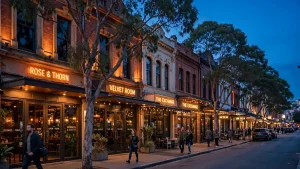
North and South Melbourne: Location Searches, Not Verified Venue Rankings
North Melbourne and South Melbourne are distinct location terms, but a suburb name alone does not establish which venues offer pokies or how they compare. A venue’s address, machine availability and operating arrangements need to be checked directly before a trip; assumptions based on a nearby suburb or a broad Melbourne label can send a search in the wrong direction.
For North Melbourne, the useful distinction is between a venue located in the suburb and one described as serving the wider area. Those are not interchangeable. The same applies in South Melbourne, where proximity does not prove that a venue is within the suburb itself. A current venue listing can help confirm an address, while the venue’s own information is the appropriate place to check whether pokies are available and under what conditions.
Neither location label supports a ranking by machine count, payout or quality. A list that presents one suburb as having “better” pokies would need comparable, current venue-level evidence; a map result or a general directory entry does not provide that. Nor does a venue’s presence in a local listing establish that its machines offer different odds from those elsewhere.
The practical comparison is therefore geographic and verifiable: confirm the exact suburb and address, then check the specific venue’s published details. That keeps North Melbourne and South Melbourne separate from surrounding areas and avoids treating a broad location match as proof of a particular pokies offering.
How to Read Claims About Melbourne Pokies and Payouts
A claim that a venue has the “best-paying” pokies needs more than a popular name or a list of machines. It needs evidence tied to the particular games and their settings, together with a clear explanation of what is being compared. Without that, a ranking of Melbourne venues cannot establish which one offers the highest return. A confident label is not a payout measurement.
The distinction matters because a pokie’s return-to-player rate, or RTP, describes a theoretical return across a large number of plays. It does not forecast the result of a particular session, or tell a player what will happen on the next spin. A specialist review reports that some game providers allow casinos to choose between different RTP settings for the same pokie. If that applies, identifying the game alone is not enough to establish its setting at a particular venue.
That report should be treated as a reason to ask for game-specific evidence, not as proof that every Melbourne venue uses different settings. A meaningful comparison would need to identify the game, its applicable RTP setting and the venue or machine to which that setting relates. It would also need to be current. A percentage stated without that context cannot support a reliable comparison between Melbourne CBD venues, Crown Melbourne or other locations.
RTP is not a promise of a fixed return to an individual. Each spin is generated independently by a Random Number Generator, so a previous result does not determine the next one. A player may receive more or less than a theoretical rate over a short period; a run of results is not evidence that a machine is “due” to pay. Likewise, a large win does not prove that a particular pokie has a better long-term return.
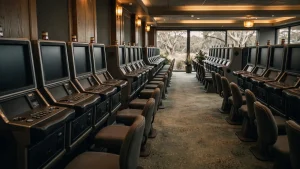
This makes “best paying pokies in Melbourne” an ambiguous claim. It might mean the highest published theoretical RTP, the largest advertised jackpot, or simply a venue where someone recalls winning. Those are different measures. A jackpot figure says nothing by itself about the chance of winning it, while an anecdote gives no controlled comparison. A result from one person’s session cannot establish that a machine pays better than another.
A useful claim should therefore be specific about its measure and its evidence. It should distinguish theoretical RTP from actual results, identify the pokie and relevant setting, and state which venue or machine the claim covers. If the wording does not supply those details, it cannot be checked as a venue-level payout ranking. In that case, “best” is a judgement, not a demonstrated financial advantage.
The same standard applies to claims about pokies in Melbourne’s city centre or elsewhere in the metropolitan area. A venue’s location, reputation or number of machines does not establish a higher return. Nor does a game title establish the setting selected for it. Without comparable, attributable information, a list presented as the best-paying options would imply more certainty than the evidence supports.

The practical distinction is between controlling exposure and predicting outcomes. Deposit limits, loss limits and session time limits can define boundaries for play; self-exclusion can block access to gambling. These tools do not improve a pokie’s RTP or make a payout more predictable. They address how much time or money is put at risk, which is a separate calculation from whether a machine will return a particular amount.
For claims about Melbourne pokies, the sound reading is narrow: a stated RTP may describe a theoretical setting, but it is not a personal forecast, and it cannot rank venues unless the setting is linked to the specific game and location. Without that connection, “best paying” remains advertising language rather than a verified comparison.
Are online pokies legal for Australian players?
Yes, Australians can play on offshore sites that accept them, but companies cannot legally offer real-money online pokies to Australian residents without a domestic licence, and none have been issued. Players have no legal recourse in Australia if an offshore casino refuses to pay winnings.
Are online pokies rigged?
Each spin is an independent random event determined by a Random Number Generator. However, some providers let casinos choose between different RTP settings for the same game, so its return percentage can vary between casinos.
What is the cost-benefit calculation of casino promotions?
Check the wagering requirement and calculate the total bets required before comparing a promotion’s potential value. For example, a $500 bonus with 40x wagering requires $20,000 in bets; a 35x requirement on a $500 deposit plus a $500 bonus means $35,000 in bets. Also check for free-spin winnings caps and withdrawal limits.
What is the legal age for online gambling in Australia?
You must be 18 or older to gamble online in Australia.