
Check the details before choosing a venue
A practical guide to checking venue locations, published hours and what can—and cannot—be established about pokies around Sydney.
Finding a Pokies Venue Near Sydney
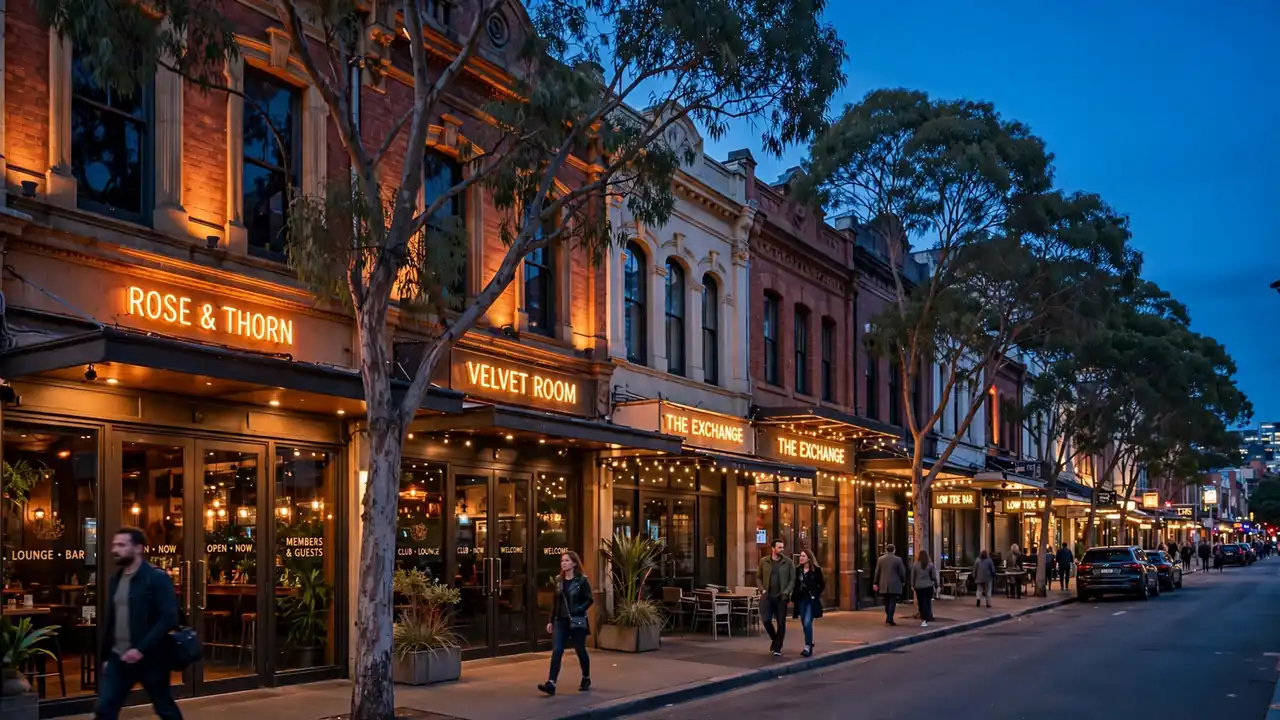
A search for a pokies venue near Sydney is a location problem, not a ranking of venues or games. “Near” has no fixed meaning without a starting point and a travel boundary. A venue that appears close to central Sydney may be a poor fit for someone starting elsewhere, while a result described as being in Sydney may still involve a substantial trip. The useful first step is therefore to define the area of interest, rather than treating the city name as a precise location.
The same distinction applies to searches for a venue near a particular landmark, transport point or part of the city. Those phrases describe an intended area; they do not establish that a venue is there. A place name in a result, page title or snippet is not enough to confirm the address of a physical venue, let alone the availability of pokies at that address. Search results can help identify leads, but they are not a substitute for checking the venue’s own current information.
Operators
Choosing pokies in Sydney for 2026 means weighing what matters to you, such as licensing information, payment options or payout timing. Use these brief verdicts as a starting point and check each operator’s current terms before playing.
-
LuckyVibe
- License
- Curacao Gaming Control Board OGL/2023/176/0095 (Hollycorn N.V.)
LuckyVibe lists a Curacao Gaming Control Board licence, OGL/2023/176/0095, held by Hollycorn N.V.
-
Playfina Casino
- License
- Curacao eGaming (Hollycorn N.V., since 2017)
- Min. deposit
- A$20-30 (depends on the offer)
Playfina Casino is listed as operating under Curacao eGaming with Hollycorn N.V. since 2017. Its minimum deposit is A$20–30, depending on the offer.
-
MrPacho
- Payout speed
- crypto 30-120 minutes, fiat 24-72 hours
- Min. deposit
- A$30
MrPacho lists crypto payouts at 30–120 minutes and fiat payouts at 24–72 hours. Its minimum deposit is A$30.
-
Uptown Pokies
- License
- Curacao (operating since 2017)
- Min. deposit
- A$20
Uptown Pokies is listed as operating under a Curacao licence since 2017. Its minimum deposit is A$20.
-
Wild Tokyo
- License
- Curacao
- Payout speed
- crypto 30-60 minutes, fiat 1-5 days
- Min. deposit
- A$10
Wild Tokyo lists a Curacao licence and payout estimates of 30–60 minutes for crypto and 1–5 days for fiat. Its minimum deposit is A$10.
-
Bizzo Casino
- License
- Curacao Gaming Control Board (TechSolutions Group N.V.)
Bizzo Casino lists a Curacao Gaming Control Board licence held by TechSolutions Group N.V.
-
Thor Casino
- License
- Curacao – Antillephone N.V. (Versus Odds B.V.)
- Min. deposit
- EUR 20
Thor Casino lists a Curacao licence through Antillephone N.V. (Versus Odds B.V.). Its minimum deposit is EUR 20.
-
Lucky Dreams
- License
- Curacao
- Min. deposit
- A$20 (POLi)
Lucky Dreams lists a Curacao licence and a minimum deposit of A$20 via POLi.
-
WinSpirit Casino
- License
- Curacao eGaming OGL/2024/923/0383 (Antillephone N.V.)
- Min. deposit
- A$30
WinSpirit Casino lists a Curacao eGaming licence, OGL/2024/923/0383, through Antillephone N.V. Its minimum deposit is A$30.
-
Vegaz Casino
- License
- Curacao OGL/2024/1335/0780
- Min. deposit
- EUR 20
Vegaz Casino lists a Curacao licence, OGL/2024/1335/0780. Its minimum deposit is EUR 20.
A sensible comparison keeps three questions separate:
- Where is the venue? Confirm the full street address and whether the result refers to a physical premises.
- Does it meet the specific requirement? A venue’s general description does not, by itself, confirm that pokies are available there.
- Does the trip make sense? Consider the route from the actual starting point, not an assumed central location.
This avoids a common category error: choosing the first result that contains the right suburb or landmark name. A matching phrase is evidence of relevance to a search, not proof of proximity or facilities. If the address cannot be confirmed, the distance calculation has no reliable starting point. If the premises are confirmed but the relevant facility is not, the location alone still does not settle the question.
“Near me” is especially dependent on context. It can mean within walking distance, a short drive, or somewhere reachable by public transport; those are different criteria. The estimate also changes with the point from which the route is measured. A result that seems close on a broad map may not be close in practical terms if the route requires a long detour or does not suit the intended mode of travel. Distance and travel time should not be treated as interchangeable.
For a local search, it helps to set a boundary before comparing results. That could be a named area, a maximum travel time the person is willing to accept, or a route type. The boundary is a personal filter, not a claim that any particular venue falls within it. Once it is set, the comparison can focus on confirmed addresses rather than promotional descriptions or broad labels such as “Sydney”.
The wording “pokies near Sydney” can also blur the difference between a physical venue and online play. Adding a city or airport name to an online search does not make a digital service a nearby premises. These are different choices and should not be compared as though they share a location. This section concerns finding a physical venue; the local place name alone cannot establish what an online service offers or whether it is lawful.
Searches that combine Sydney with “open now” add another requirement: current operating information. A location result does not establish that a venue is open at the time of checking. That question needs a separate, venue-specific confirmation; it cannot be inferred from distance, a map pin or a search label. Similarly, a reference to a central station or central business district does not verify that a suitable venue is inside or adjacent to that area.
The practical standard is modest but firm: confirm the address, confirm the relevant facility directly, and then assess the journey from the actual starting point. If any of those elements is unresolved, the result is only a lead, not a confirmed nearby option. No city-wide label can do the arithmetic on behalf of a particular trip.
Do
- Confirm the full street address of the venue
- Verify if pokies are specifically available at the premises
- Assess the journey from your actual starting point
Don't
- Choose the first result containing a suburb or landmark name
- Assume a central location is the starting point
- Treat a broad city label as proof of proximity
Online Pokies and the Australian Legal Position
Searching for online pokies in Sydney can blur two different legal settings: gambling at a physical venue and a company providing real-money games over the internet. The distinction is not the game’s name or whether a player is in Sydney. It is how the service is delivered. The Interactive Gambling Act 2001 addresses interactive gambling services supplied to people in Australia; it makes it illegal for operators to provide real-money online pokies to Australian residents without a domestic licence. No such licences have been issued, so there is no Australian-licensed online casino.
That position does not mean the law treats every person who plays offshore as an offender. Its relevant prohibition is directed at operators. Australians are not subject to player penalties for playing on offshore sites that accept them. The legal exposure instead concerns the service provider’s conduct, and the lack of a local licence is not a minor paperwork gap: Australian law does not provide a licensing route for an online casino to serve local customers.
Physical gambling is a separate mode of operation. A pokie played at a venue is not an online casino service merely because the machine uses electronic technology. The online prohibition should therefore not be read as a general statement about physical pokies. Nor does the existence of physical venues establish that an internet service offering the same style of game is locally licensed. The delivery method changes the legal analysis.
The Australian Communications and Media Authority (ACMA) is the domestic regulator responsible for enforcing the Interactive Gambling Act. It blocks access to illegal offshore gambling sites, and internet service providers must comply with its blocklist. Blocking is an enforcement measure, not a local licence for the offshore operator, nor evidence that a particular service meets Australian requirements. A site becoming inaccessible can reflect that blocking process; availability at a given moment does not establish lawful local authorisation.
There is also a practical limit on recourse. If an offshore casino refuses to pay winnings, an Australian player has no legal recourse in Australia to compel payment. That changes the calculation materially: an advertised balance is not the same as money that can be recovered through a domestic licensing and complaints system. The operator is outside the Australian online casino licensing framework, and the player cannot rely on Australian legal remedies to resolve a payout dispute.
Terms such as “no deposit” or “real money” do not change the legal category. If an online service offers real-money pokies to people in Australia, the relevant issue remains the operator’s provision of a prohibited interactive gambling service, not the wording of its offer. Likewise, a reference to a Sydney casino or to cashless play does not establish that the online service is connected to a physical venue or holds an Australian licence.
The practical distinction is therefore narrow but important. Physical pokies and internet-delivered real-money pokies are not interchangeable for legal purposes. Australia has no licensed online casino, ACMA blocks access to illegal offshore gambling sites, and players who use an offshore service have no Australian legal recourse if winnings are withheld. The law places its prohibition on operators rather than players, but that does not create local oversight or a domestic route to recover disputed funds.
Opening Times: What Can and Cannot Be Confirmed
A request for an early opening time needs a venue-specific answer. A general statement that pokies are available in Sydney cannot establish when a particular venue starts operating its machines. Nor does a hotel label, a late-night listing or a past visit establish the current schedule. Without a current schedule tied to a named venue, no particular opening or closing time can be stated reliably.
The distinction matters because a venue’s doors being open does not, by itself, confirm that its pokies are operating. The relevant detail is the operating schedule for the machines, not simply the venue’s general business hours. Listings that omit this distinction leave an important condition unresolved.
For an early visit, the useful information is a published schedule that identifies the venue, the applicable day and the hours during which the machines operate. A schedule should also be current: older directory entries or undated pages may describe arrangements that have since changed. If those details are absent, the practical answer remains unconfirmed rather than an estimate inferred from the venue type or its usual business.
The same standard applies to late finishes. A venue being described as open late does not prove that its pokies remain available until closing, and a closing time for the building should not be treated as a machine operating time. Search wording that names a particular hour does not supply evidence that any venue follows it. A specific time needs support from a current, venue-specific source.
One operating requirement reported by regionriverina.com.au concerns venues with more than 20 gaming machines: from 1 July, a dedicated responsible gambling officer (RGO) must be on duty while those machines are operating. This is a condition attached to machine operation at venues above that threshold, not a published opening schedule. It does not establish when a venue opens, when its machines start, or whether a particular Sydney venue falls within the category.
Opening time and payout percentage are separate questions. An operating schedule can establish when machines are available, but it does not establish the return setting of a particular pokie. Conversely, information about a game’s return does not show that the game is operating at a given venue or hour. Those details need separate evidence; combining them in one listing does not make either one more certain.
A useful check therefore records the venue name, the date the schedule was published or confirmed, and whether the stated hours refer to the premises or to the machines. If the schedule is silent on machine hours, that silence should not be filled with a guess based on a general opening time. If it gives only a broad description such as “early” or “late”, it is not precise enough to confirm a specific start or finish.
The available operating condition for larger venues is clear in its scope: the RGO duty applies while the machines are operating. It does not convert that condition into a timetable. Until a current venue-specific schedule states machine hours, an exact early opening or late closing remains unconfirmed. A precise answer requires a precise schedule; otherwise the time is an assumption, not an operating fact.
How Pokie Returns and Random Spins Work
A comparison of pokie returns needs to distinguish the game’s published return setting from the result of any individual play. RTP, or return to player, is expressed as a percentage and describes a theoretical proportion of wagers returned over extended play. It is not a forecast of what a particular machine will pay during a visit, nor a promise that a set amount will come back after a particular number of spins.
A specialist review reports that some game providers give casinos a choice of RTP settings for the same pokie. As a result, identical game titles can be configured with different return percentages at different casinos. A game’s name alone therefore does not establish its RTP. Where the setting is relevant to a comparison, the stated figure needs to relate to the specific game configuration, rather than being assumed from the title or from a figure seen elsewhere.
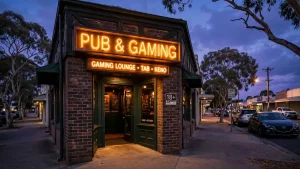
That distinction matters when weighing claims about the best-paying pokies in Sydney. A broad claim about a game cannot establish the setting used by a particular machine. Nor does a higher published RTP settle every consideration: it describes a theoretical return measure, not the timing or size of individual wins. Without a confirmed setting for the machine being considered, a numerical comparison between venues would lack a necessary input.
RTP also works on a different timescale from a single play. It does not prescribe a sequence of wins and losses, or require returns to arrive evenly. A session can produce an outcome that differs substantially from the theoretical return, because the percentage is not a personal payout schedule. Treating it as one would turn a long-run measure into a short-term promise it does not make.
Each spin is generated as a separate random event by a Random Number Generator. In practical terms, the result of an earlier spin does not set the result of the next one. A run of losses does not make a win due, and a recent win does not make another one less possible. Previous outcomes are not a reliable method for predicting the next result.
This is why patterns that appear in a short session should not be confused with evidence about a machine’s return setting. A streak may be noticeable, but it does not reveal the RTP or establish that the machine is about to change direction. The random process applies to each spin; the return percentage describes a separate theoretical property of the game configuration.
- RTP
-
A theoretical percentage describing the proportion of wagers returned to players over extended play, not a guarantee of a payout for an individual session.
For searches framed around Sydney casino pokies, the useful comparison is therefore limited to two questions: what RTP setting is confirmed for the specific configuration, and what that setting does—and does not—say about a single session. A game title, a short run of results, or a claim that a pokie pays well cannot substitute for the setting itself. These mechanics explain how return figures should be read; they do not identify a best game or guarantee an outcome.
Airport and North Sydney Searches: Location Limits
An airport label can refer to the terminal, nearby commercial areas or a broader transport precinct. Those are not interchangeable when identifying a place to play. A reference to Sydney Airport alone does not identify a particular venue, confirm that pokies are available inside the terminal, or establish that a nearby business has them. A usable location needs a named venue and current details supplied by that venue.
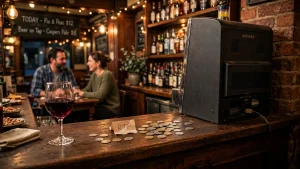
The same distinction applies to North Sydney. The suburb or district name describes an area, not a specific premises or its facilities. A general reference to pokies in North Sydney cannot establish which venue is meant, whether it operates gaming machines or whether those machines are available to the public. Treating an area label as a venue listing turns a broad location into a claim it cannot support.
City-wide wording has the same limitation. “Sydney city” may be used loosely for the central area, while the airport and North Sydney are separate location references. Combining those terms does not make them one searchable venue zone. Before making a trip, the practical details are the premises’ exact address and its own current information about gaming facilities. Without those details, a map pin or a phrase containing a place name is not confirmation of access to pokies.
The maximum cash payout question is also venue- and machine-specific. A location name cannot establish a payout ceiling, and a general figure for Sydney would not account for the rules that apply to a particular machine or venue. Any stated limit needs to be tied to the relevant machine and its published terms. Where those terms are not available, there is no sound basis for treating a number found elsewhere as the maximum payable at that location.
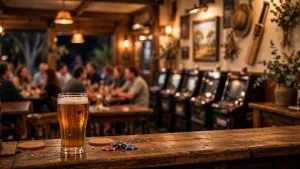
This matters because “maximum cash payout” can be taken to mean different things: a machine’s stated prize limit, the amount payable at once, or a venue’s process for paying a win. Those are not necessarily the same condition. The relevant terms should specify what the limit applies to and how payment is handled; otherwise, the headline number is incomplete. A payout figure detached from its conditions is not a reliable comparison.
For airport, North Sydney and central Sydney locations alike, the sensible unit of comparison is a named premises, not a district keyword. Location, machine availability and payout conditions each require their own confirmation. None follows automatically from a broad area description.
Crown Sydney Searches: What the Available Facts Establish
Crown Sydney is a specific name, but the name alone does not establish whether pokies are available there, what a gaming area contains, or whether any particular machine can be played. “Casino” and “pokies” may appear together in a description, but that wording is not a machine list or confirmation of access.
That distinction matters when assessing claims about Crown Sydney pokies or a pokies room. A useful venue description would need to identify the offering directly: whether pokies are present, what games or machines are included, and what conditions apply to entry and use. Without those particulars, a claim that Crown Sydney has a particular pokie selection cannot be treated as established. The same applies to claims about a “best” room: a ranking needs a defined set of venues and comparable information, not just a familiar name.
Search results, directory entries and promotional wording can compress several different ideas into one phrase. A hotel, a casino brand, a gaming facility and a particular pokie room are not interchangeable descriptions. Nor does the presence of a venue name in a result prove that its current facilities match the wording around it. The practical test is whether the statement describes the machines themselves and gives enough detail to distinguish a confirmed offering from an assumption.
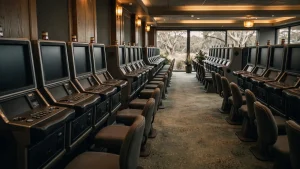
For Crown Casino Sydney pokies, the relevant question is not whether the phrase sounds plausible. It is whether a current, direct description identifies pokies at that location. If the wording only names Crown Sydney or refers broadly to casino facilities, it does not settle the machine question. A game title, machine count, room layout or access condition should not be inferred from the venue name.
The same standard applies to comparisons with other Sydney rooms. “Best” has no useful meaning without a stated basis, such as a defined game range or a specific feature being compared. No ranking can be drawn from a name alone, and a venue should not be described as having the best pokies room in Sydney without substantiated, comparable details.
For any Crown-related claim, separate three points: the identity of the place, the existence of pokies there, and the details of the machines or room. Evidence for one does not automatically establish the others. That is a modest distinction, but it prevents a search label from doing the work of a venue specification.

Venue Operations and Responsible-Gambling Requirements
Responsible-gambling arrangements are part of venue operations, not a measure of which Sydney venue offers the best pokies. A requirement reported for venues above a specified machine threshold links staffing to the hours when the machines are running. The number of machines and whether they are operating therefore determine when the staffing obligation applies.
A report by regionriverina.com.au says that, from 1 July, a venue with more than 20 gaming machines must have a dedicated responsible gambling officer (RGO) present while those machines are in operation. The threshold matters: the reported rule is not stated as applying to every venue, regardless of its machine count. Nor does it make the officer’s duty dependent on a venue’s advertised opening hours; it is tied to machine operation.
The same report describes a one-month grace period for venues to take down signage and put the responsible gambling officer arrangements in place. That transition period concerns implementation of the stated requirements. It does not change the machine-count threshold or the requirement for an RGO to be on duty while the machines operate.
Gambling Incident Register
A venue obligation to record occurrences where a patron's behaviour indicates possible gambling harm or that harm may already be affecting them.
The reporting also describes a gambling incident register as a venue obligation. The register is intended to capture occurrences, including situations in which a patron’s behaviour indicates possible gambling harm or that harm may already be affecting them. This makes the register part of the venue’s operational record of incidents, rather than a promotional feature or a measure of game performance.
For comparisons between venues, these obligations answer a narrower question than a ranking can. They describe staffing and record-keeping responsibilities in the circumstances covered; they do not identify a “best” venue or establish that any particular Sydney venue meets the threshold. A venue’s machine count, operating status and handling of incidents are distinct matters, and the requirements should not be treated as evidence of game quality or likely returns.
Twenty-Four-Hour Play and Published Hours
A listing that describes a Sydney venue as open around the clock is a claim about a particular premises, not evidence that continuous access to pokies is available there. The distinction matters: a venue’s advertised operating hours do not, by themselves, establish when its gaming machines are operating. Those are separate details and need to be confirmed separately.
“Open now” is also time-sensitive. A result may reflect a schedule that has changed, a special closure, or an outdated listing. Without a current, venue-specific confirmation, it cannot establish that the premises are open at the moment or that pokies are available. A general label such as “24-hour” is not a substitute for a dated schedule.

For a reliable check, the useful record is the venue’s own published opening information, with the relevant day and any stated exceptions. If machine operating times are not specified, that point remains unresolved. A directory entry can help identify a venue’s published schedule, but it should not be treated as confirmation of machine access unless it expressly covers that detail.
Hours can also be presented in different ways. A venue may publish trading hours without explaining whether every area remains accessible for the full period. The wording therefore matters: “open” can describe the premises, while the question concerns access to pokies. Where the schedule is silent on that distinction, no conclusion about continuous play follows.
The same test applies to claims about Sydney pokies opening hours more generally. A city-wide description cannot establish the schedule of an individual venue. Hours are specific to the premises and may be updated; an old listing or a search result without a clear date is weak evidence for a current visit. Confirmation should come from a current venue-controlled source, and any uncertainty about machine hours should remain explicit rather than being filled with an assumption.
A practical comparison records three things: the venue named, the date or day covered by its published schedule, and whether the schedule refers to the premises or to gaming-machine operation. If the last point is absent, the record confirms only the stated opening hours, not 24-hour pokies. That is the difference between a claim that can be checked and a phrase that merely sounds definitive.
- Identify the specific venue name and address
- Check the current published schedule for the premises
- Confirm if the schedule explicitly covers gaming machine operation
- Verify the current date of the information source
Sydney CBD Clubs and Pokies
A CBD club search can combine several separate questions: whether a particular club operates pokies, whether it is within the area meant by “Sydney CBD”, and whether its current arrangements suit the intended visit. Those questions require venue-specific information. A general reference to Sydney clubs does not establish that any particular club has pokies, and a name or address alone would not establish machine availability.
For a comparison to be useful, each entry would need to identify the venue and substantiate the relevant details. Without that basis, a list of supposed CBD venues would turn assumptions into recommendations. “Best” is no more measurable: it could refer to location, facilities, operating hours, or machine choice, and none of those can be inferred from a venue category.
The same distinction matters for self-exclusion. Deposit limits, loss limits, session time limits and self-exclusion are recognised responsible-gambling tools, but their availability and operation depend on the setting. BetStop applies to Australian-licensed operators; it does not bind offshore sites. It should not be treated as a way to exclude someone from every gambling service or venue. For a physical club, the relevant self-exclusion process must be checked with that venue or the appropriate regulator, rather than assumed from an online scheme.
Age is also a basic condition: gambling in Australia is restricted to people aged 18 or older. That rule does not identify which CBD clubs have pokies, nor does it replace checking a venue’s own entry and gambling conditions.
The practical standard is evidence tied to the individual club: a current venue listing or direct confirmation that specifies whether pokies are available, plus the applicable responsible-gambling and self-exclusion arrangements. If those details cannot be confirmed, the club should remain an unverified possibility, not part of a recommended shortlist. A shorter list with substantiated entries is more useful than a longer one built from implication.
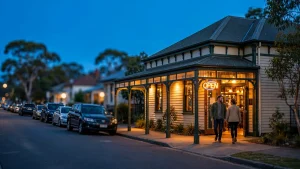
Parkes and Other Sydney Pokies Searches
A request involving Parkes and Sydney does not, by itself, identify a particular place. Parkes may be intended as a local area, a destination outside Sydney, or part of a venue’s name. Those possibilities point to different locations, so treating the phrase as proof that a Parkes venue is in Sydney would be an unsupported leap.
The same distinction matters for broader requests about pokies in Sydney. Without a named venue or a more precise area, the wording does not establish which premises are meant, whether they have pokies, or what facilities they provide. A city name and a gaming term are not a venue record. They cannot support a reliable statement about a particular site.
For a useful comparison, the location needs to be unambiguous first. A full venue name or a clearly identified suburb can separate one place from another; otherwise, even a result that appears relevant may refer to a different Parkes or a different Sydney-area location. The spelling alone is not enough to settle that question.
“Best” also needs a defined measure. It could mean a preferred location, a particular kind of venue, or a feature of the pokies themselves. Those are separate criteria, and none can be assessed from a broad place name alone. No specific ranking follows simply from describing a venue as being in Sydney.
The practical boundary is narrow: a general Sydney request can be treated as a city-level topic, while a Parkes reference needs clarification before it can be tied to a location. Neither wording establishes the presence of pokies at any named or implied premises. Keeping those claims separate avoids turning an ambiguous place reference into a factual recommendation.
Are online pokies legal for Australian players?
Australian law targets operators: providing real-money online pokies to Australians without a domestic licence is illegal, and no Australian online casino licences have been issued. Players are not penalised for playing on offshore sites that accept them, but they have no legal recourse in Australia if an offshore casino withholds winnings.
What is the legal age for online gambling in Australia?
You must be at least 18 years old to gamble online in Australia.
Can casinos change the RTP of their games?
Yes. Some game providers let casinos choose between different RTP settings for the same pokie, so its return percentage can vary between casinos.