
Check what is actually available before you go
Availability depends on the venue and time; general listings do not confirm machine access or a 24-hour schedule.
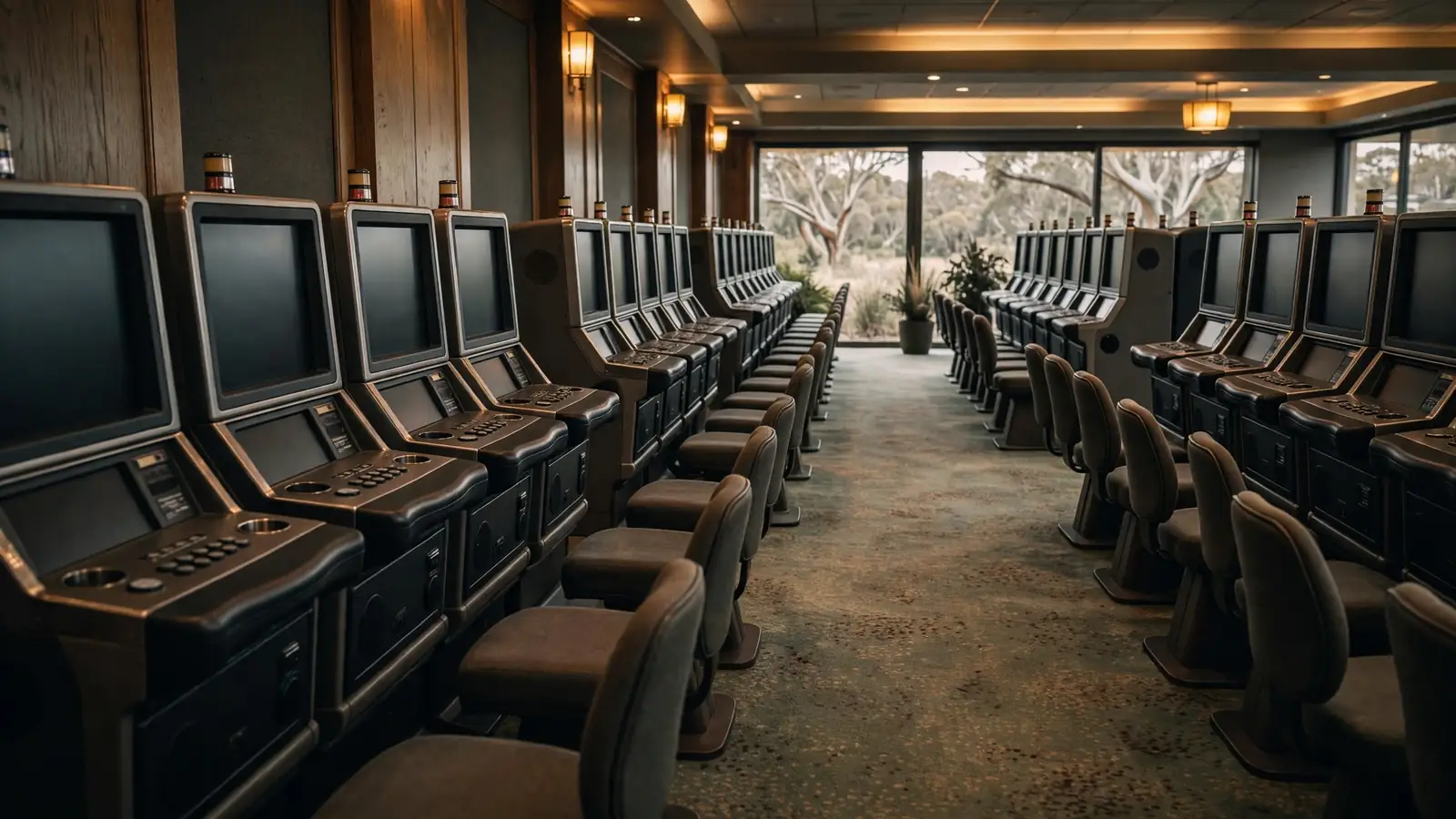
Canberra Pokies: What Can Be Confirmed About Availability
A current answer about Canberra pokies depends on a particular venue and the moment being checked. “Open” can refer to a venue admitting patrons, a gaming area being accessible, or pokies being available to play. Those are related but not interchangeable conditions. A venue’s general existence, for instance, does not establish that its machines are operating at the time someone plans to visit.
That distinction matters when assessing claims that pokies are open now. A status needs to describe the relevant venue at a specific time; a broad statement about Canberra cannot establish what is happening at every location. Nor does a general description of a venue confirm that a particular machine is working or available. The practical question is local and immediate, not something a city-wide label can settle.
A direct check with the venue is the appropriate way to establish current access before setting out. The useful confirmation is specific: whether the premises are admitting patrons and whether the gaming area is accessible at that time. If a particular machine matters, its availability is a separate point to clarify. Information can change after it is given, so an old listing or an undated page should not be treated as a live status report.
Operators
Choosing pokies to play in Canberra in 2026 means checking the details that matter to you before signing up. This list offers a concise reference to the available operator information.
-
LuckyVibe
- License
- Curacao Gaming Control Board OGL/2023/176/0095 (Hollycorn N.V.)
LuckyVibe lists a Curacao Gaming Control Board licence, OGL/2023/176/0095, held by Hollycorn N.V.
-
Playfina Casino
- License
- Curacao eGaming (Hollycorn N.V., since 2017)
- Min. deposit
- A$20-30 (depends on the offer)
Playfina Casino is listed as operating under Curacao eGaming through Hollycorn N.V. since 2017. Its minimum deposit is A$20–30, depending on the offer.
-
MrPacho
- Payout speed
- crypto 30-120 minutes, fiat 24-72 hours
- Min. deposit
- A$30
MrPacho lists a minimum deposit of A$30. Its stated payout times are 30–120 minutes for crypto and 24–72 hours for fiat.
-
Uptown Pokies
- License
- Curacao (operating since 2017)
- Min. deposit
- A$20
Uptown Pokies is listed as operating since 2017 under a Curacao licence. Its minimum deposit is A$20.
-
Wild Tokyo
- License
- Curacao
- Payout speed
- crypto 30-60 minutes, fiat 1-5 days
- Min. deposit
- A$10
Wild Tokyo lists a Curacao licence and a minimum deposit of A$10. Its stated payout times are 30–60 minutes for crypto and 1–5 days for fiat.
-
Bizzo Casino
- License
- Curacao Gaming Control Board (TechSolutions Group N.V.)
Bizzo Casino lists a Curacao Gaming Control Board licence held by TechSolutions Group N.V.
-
Thor Casino
- License
- Curacao – Antillephone N.V. (Versus Odds B.V.)
- Min. deposit
- EUR 20
Thor Casino lists a Curacao licence associated with Antillephone N.V. and Versus Odds B.V. Its minimum deposit is EUR 20.
-
Lucky Dreams
- License
- Curacao
- Min. deposit
- A$20 (POLi)
Lucky Dreams lists a Curacao licence and a minimum deposit of A$20 via POLi.
-
WinSpirit Casino
- License
- Curacao eGaming OGL/2024/923/0383 (Antillephone N.V.)
- Min. deposit
- A$30
WinSpirit Casino lists a Curacao eGaming licence, OGL/2024/923/0383, associated with Antillephone N.V. Its minimum deposit is A$30.
-
Vegaz Casino
- License
- Curacao OGL/2024/1335/0780
- Min. deposit
- EUR 20
Vegaz Casino lists a Curacao licence, OGL/2024/1335/0780. Its minimum deposit is EUR 20.
This is not the same as asking for an opening-hours schedule. A schedule describes stated operating times; an availability check concerns whether access is actually in place now. Even a published schedule would not, on its own, prove that a gaming area or individual machine is available at a given moment. Keeping those questions separate prevents a general timetable from being mistaken for confirmation of current play.
The same care applies to searches about early or late access. A time included in a search does not confirm that a venue is open then, and it does not establish that pokies are operating. The answer requires venue-specific information for the time in question. Without that, a precise claim would be more confident than the underlying information allows.
“Canberra pokies” also does not identify a single venue or a single set of machines. Availability cannot be inferred from the city name alone. A statement about one location would not establish access elsewhere, while a general reference to local venues would not verify any one location’s current status. For a useful answer, the place and the type of access being checked need to be clear.
There is also a difference between being able to enter a venue and being able to play. Access to the premises does not necessarily mean every area is open or every machine can be used. Conversely, a machine-related listing or description does not establish that the venue is admitting patrons at that moment. Treating these as separate checks keeps the meaning of “available” precise.
 Geelong pokies: what open-now listings can confirmLearn why a venue’s open status does not confirm that its pokies are operating, and what searches by area or venue can…
 Pokies in South Australia: RTP and Access ChecksLearn why RTP is a long-run comparison, not a personal forecast, and why the same pokie can have different settings across casinos.…
A dependable status therefore has a limited scope. It relates to the specific venue, the time it was confirmed and the kind of access covered. If any of those details are absent, the statement should not be stretched into a promise about all Canberra pokies or about later conditions. The most accurate wording is also the least theatrical: confirmed for a particular place and moment, rather than guaranteed across the city.
Availability is separate from the financial terms of play. A venue’s current status says nothing by itself about a pokie’s payout percentage, and a payout figure would not establish whether the venue or machine is accessible. Those are different questions and require different information. A percentage should not be inferred from a venue listing, nor should a machine’s presence be treated as evidence of its return settings.
Responsible-gambling controls are another distinct consideration. Deposit caps, loss caps and session-time limits can help structure play, while self-exclusion provides an option to stop access. These measures concern how gambling is managed; they do not confirm whether a venue is open or whether a machine is available. Keeping availability and personal controls separate makes each claim clearer.
Do
- Contact the venue directly to establish current access
- Verify if the specific gaming area is accessible
- Check if the particular machine is working
Don't
- Rely on city-wide labels to confirm availability
- Treat undated pages as live status reports
- Mistake a general timetable for confirmation of current play
For a current Canberra visit, the sound basis is a recent, direct confirmation tied to the intended venue and access needed. General descriptions can provide context, but they cannot answer a live-status question on their own. A claim that pokies are open now is meaningful only when its location and timing are clear.
What a Pokie’s Return Figures Can—and Cannot—Show
A return-to-player figure can look like a direct comparison between pokies, but it needs context. A specialist review reports that some game providers allow casinos to choose between different RTP settings for the same pokie. If that applies, the title alone does not establish which return setting is in use. The same game could therefore display different return percentages at different casinos.
That distinction matters when comparing claims about pokies in Canberra. A game name, a venue name or a prominent percentage is not enough to establish that one pokie pays better than another. The relevant comparison would require the actual setting attached to the game at the particular casino. Without that information, a ranking of the “best paying” games would imply more certainty than the figures support.
RTP is a setting expressed as a percentage, but it should not be read as a promise about an individual session or a particular spin. Even where a figure is available, it describes the game setting rather than a guaranteed result for a player. It cannot identify which game will produce a win next, or when a payout will occur. A percentage can be precise and still answer a narrower question than the one a player has in mind.
 Perth Pokies: Opening Hours and AccessPerth venue hours do not necessarily confirm that gaming areas are operating. Check current information and confirm before travelling.
 Big Red Pokies Online in Australia: What to KnowSee what can be verified about Big Red, free play, bonuses and cash-outs, alongside the fact that no Australian online casino licences…
The other essential point is how each spin is determined. A pokie uses a Random Number Generator, and every spin is an independent random event. The result of one spin does not set up the result of the next. A run of losses does not make a win due, and a recent win does not establish that another is less likely. Past outcomes are not a schedule.
That independence also limits what can be inferred from short-term observations. A few results from one session cannot confirm that a game has a higher return setting, nor can a sequence of wins establish that it is the best option. The outcomes are individual random events; the setting and the results are different things. Conflating them turns a return figure into a prediction it was not designed to make.
For anyone comparing pokies, the useful distinction is between configuration and outcome. The RTP setting is a property that may vary between casinos for the same game, according to the specialist review. An individual result is generated separately by the RNG. Knowing one does not reveal the other: a displayed setting does not tell what a particular spin will do, while a recent result does not prove which setting is active.
This is why a list of popular titles would not, by itself, answer which Canberra pokie has the highest return. Popularity is not a return setting, and a game’s name does not identify its configured percentage at a particular location. Nor does the existence of an RTP figure establish that the same configuration applies everywhere the game appears. The comparison needs the game, the casino and the applicable setting—not just a familiar title.
The same caution applies to searches for casino pokies in Canberra or the CBD. A return percentage cannot establish where a game is available, and the name of a game cannot verify a local venue’s configuration. Those are separate questions. A figure attached to one version of a pokie should not be transferred to another casino without confirmation that the setting matches.
A sound reading of RTP is therefore limited but useful: it may help describe a game’s configured return, provided the setting for that casino is known. It does not forecast a session, turn past spins into evidence about the next one, or prove that a particular game pays best in Canberra. In gambling, the difference between a measured setting and an expected personal result is not a technicality; it is the whole calculation.
Online Play and the Australian Legal Position
The legal distinction is between the company providing an online casino and the person accessing it. Under the Interactive Gambling Act 2001, offering real-money online pokies to people in Australia is prohibited unless the operator holds a domestic licence. No Australian licences for online casinos have been issued, so there is no Australian-licensed online casino.

That prohibition applies to online casino-style services, including pokies, rather than to a local Canberra venue’s physical machines. A website that accepts Australian customers does not become lawful simply because it is available to them, uses familiar payment methods or describes itself as licensed overseas. A foreign licence is not an Australian licence.
The Act targets operators, not individual players. That distinction does not make an offshore service an Australian-regulated option: the operator remains outside the domestic licensing system, and the service is not authorised to provide real-money online casino games to people in Australia. The legal position is therefore not a question of finding a Canberra-branded site or a site that accepts Australian customers. Neither circumstance supplies the missing domestic licence.
There is also a practical difference between being able to access a website and having protection if a transaction goes wrong. Offshore sites may accept Australians, but acceptance is not evidence of local oversight or an enforceable Australian customer relationship. If an offshore casino refuses to pay winnings, Australian players have no legal recourse in Australia against that operator. The balance can be visible on a screen; that does not establish an Australian means of compelling payment.
For someone comparing the cost and outcome of gambling, this is a material condition, not a footnote. A claimed bonus, a high betting limit or a promise of quick withdrawals cannot resolve the jurisdiction problem. If winnings are withheld, the stated absence of Australian recourse means there is no domestic legal route to require the offshore operator to pay. A larger advertised payout changes the amount at stake, not the protection available.
Searches for online pokies associated with Canberra can therefore point to two very different things: a local physical venue, or a remote operator. The word “Canberra” in a website name or promotional description does not establish that the business is located in the city, holds an Australian licence or is subject to Australian casino regulation. Nor does a site’s willingness to accept a deposit establish any of those points.
The same legal distinction applies whether a promotion describes a no-deposit offer, real-money play or high limits. Such wording concerns the operator’s commercial terms; it does not change the Interactive Gambling Act’s treatment of online casino services. It also does not create a domestic licence where none has been issued. An offer may be presented as having no entry cost, but any later dispute over winnings still sits within the same offshore enforcement gap.
Accordingly, “best paying” is not a legally meaningful assurance about an online option for Canberra residents. A payout claim says nothing by itself about Australian authorisation or what happens if payment is refused. The key distinction is between a provider’s claim and an enforceable local remedy. For online casinos, Australia has no domestic licensing route and no Australian recourse against an offshore operator that withholds winnings.
Near Canberra Airport: Location Claims Need Verification
A claim that a venue is near Canberra Airport depends on two separate details: a confirmed address and a defined measure of distance. Without both, “near” is only a label. It does not establish whether a venue is inside the airport, in the surrounding area, or somewhere else in Canberra.
The distinction matters because a map result can refer to a business, a suburb, or a broad service area rather than a pokies venue at that point. A name associated with Canberra Airport is not, by itself, evidence of a gaming venue there. Nor does a Canberra address establish airport proximity: the city and the airport are not interchangeable location descriptions.
Distance can also mean different things. Straight-line distance is not the same as the road route, and neither indicates how long a trip will take. A useful location statement should identify the venue’s address and make clear whether the distance is measured by road or in a straight line. A travel-time estimate would need its own conditions, since it can vary with route and traffic.
For anyone comparing airport-area options, the practical sequence is straightforward: establish the venue’s exact address, then check that address against a current map and the venue’s own listing. Any published distance should be tied to that particular address and measurement method. If those details are absent, a precise-sounding claim can still be unhelpful.
The same standard applies to descriptions such as “north Canberra” or “near the CBD.” They describe broad areas, not a specific venue or its distance from the airport. A label can help orient a location search, but it cannot substitute for an address. Combining “Canberra” and “airport” in a description does not narrow the location enough to support a route or proximity claim.
Verifying Location
-
1
Find the Address
Establish the venue's exact physical address.
-
2
Map Comparison
Check that address against a current map and the venue's own listing.
-
3
Confirm Distance
Verify if the stated distance is measured by road or in a straight line.
Airport proximity is also different from whether a venue is open or whether machines are operating. A map marker does not settle either point. Those are separate details that require current confirmation from the venue; they should not be inferred from a location label or an old listing.
The wording “pokies at Canberra Airport” makes a stronger claim than “pokies near Canberra Airport.” The first suggests a location within the airport; the second suggests a venue in its vicinity. Neither should be treated as established without a confirmed venue address. Search wording may blur that distinction, but the physical location does not.
A reliable airport-area description therefore needs more than a broad Canberra reference. It needs a specific venue, an address that can be matched to a current map, and a clear basis for any stated distance. Without those elements, the location cannot be assessed precisely enough to support a practical comparison.
Canberra Venues and the Responsible-Gambling Rules
A venue’s reputation, location or popularity does not establish how its gambling safeguards operate. The relevant rule described in a report by regionriverina.com.au is tied to the number of gaming machines: from 1 July, a venue with more than 20 machines must have a dedicated responsible gambling officer (RGO) on duty whenever those machines are operating.
That condition has two parts. The venue must exceed the machine threshold, and the officer must be on duty during machine operation. The requirement is not described as applying to every venue regardless of machine count, nor does it establish that a particular Canberra venue meets the threshold. Without confirmed information about a venue’s machines and staffing, the rule cannot be used to infer its compliance.
The same report says venues will be required to keep a gambling incident register. It is intended to record occurrences, including situations where a patron displays behaviour indicating that they may be at risk of, or affected by, gambling harm. This makes the register a record of incidents, not a measure of a venue’s overall quality or a guarantee that gambling harm will be prevented.
For someone comparing Canberra venues, these requirements provide regulatory context rather than a ranking. A venue with an RGO on duty is not thereby shown to offer better-value pokies, a different return, or a more favourable experience. Nor does the existence of an incident register establish how many incidents have occurred or how they were handled. Those conclusions require information that the requirements themselves do not provide.
The distinction matters when the phrase “best pokies venue” is treated as though it had a measurable regulatory answer. The rules described here set obligations for venues that meet a machine-count threshold; they do not identify the best venue in Canberra, in the CBD or elsewhere. They also do not confirm the number of machines at any named location.
A practical assessment therefore needs to keep compliance and venue choice separate. The RGO requirement concerns who must be present while qualifying machines are operating. The register requirement concerns what incidents must be recorded. Neither obligation supplies a score for comparing venues, and neither substitutes for evidence about a particular location. The threshold and duties are specific; the conclusions that can be drawn from them are narrow.
Opening Hours: No Verified 24-Hour Schedule
A claim that pokies operate around the clock in Canberra needs confirmation for the particular venue and the date in question. “Open 24 hours” is a specific operating-hours statement, not a description that can safely be inferred from a venue having gaming machines. No Canberra-wide schedule establishes that any venue keeps its pokies available throughout the day and night.
Opening hours and machine availability are also different questions. A venue’s general trading hours do not, by themselves, confirm the hours during which its pokies can be used. A listing that says a venue is open may therefore be insufficient for someone trying to establish whether gaming is operating at a particular time.
The distinction matters most for “open now” claims. These depend on the time of checking and on current venue information. A search result, saved listing or older directory entry may not reflect a change to a venue’s hours. Even a displayed schedule should be checked against an up-to-date notice from the venue before travel, particularly where the intended visit is late at night or early in the morning.
For Canberra pokies opening hours, the useful unit of information is the individual venue’s current schedule, not a city-wide assumption. The same applies to claims about 24-hour venues: the venue name, the relevant date and the hours for the gaming area need to be clear. Without those details, a statement that pokies are available at any hour is not a reliable basis for planning a visit.
The wording of an hours listing should also be read narrowly. “Open” may refer to the premises generally; it need not settle whether the gaming area is operating. Likewise, a venue that operates late is not necessarily open all night. Those distinctions cannot be resolved by treating “late,” “24-hour” and “open now” as interchangeable labels.
For a practical check, the venue’s own current hours are the relevant reference, with direct confirmation preferable where the schedule is unclear. A general directory can help identify a possible venue, but it should not be treated as proof of overnight operation. No dependable 24-hour schedule for Canberra pokies can be stated without that venue-specific confirmation.
Crown and Canberra: The Name Is Not Verification
A reference to Crown alongside Canberra does not establish that a Crown casino, pokies room or particular machine is located in the city. A name can be part of a question, a comparison or an assumption; none of those uses confirms a local venue or a connection between a brand and a Canberra address.
That distinction matters when assessing claims about pokies at a Crown casino in Canberra. Before treating such a claim as a venue detail, the location and operator would need to be established independently. The brand name alone does not confirm that the venue exists there, that it has a pokies room, or that any machines are available. Repeating the name in a listing would not add evidence.

The same standard applies to descriptions such as “best pokies room”. “Best” requires a defined measure and comparable information. A room’s name does not establish its machine selection, current operating status, service conditions or performance. Nor does it establish that one venue is better than another. Without verifiable details for the venues being compared, a ranking would be presentation, not analysis.
A maximum cash payout claim also needs a precise scope. It might refer to a particular machine, a venue policy, a prize limit or a payment process; those are not interchangeable. A figure without its conditions can make a headline sound definitive while leaving the actual entitlement unclear. No Crown- or Canberra-specific payout amount can be inferred from the name itself, and no maximum should be attributed to a venue without evidence tied to that venue and its terms.
For any named venue, useful confirmation would connect the operator, physical location and relevant facility in a way that can be checked. Details about a machine or payout would need to be linked to the applicable game and conditions, rather than carried across from another venue or a generic description. If those links are absent, the accurate statement is limited: the wording identifies a name, not a verified Canberra location or offer.
This is not a judgement on Crown or on any venue elsewhere. It is a limit on what a brand reference can establish about Canberra. Until the local connection is confirmed, claims about a Crown pokies room, its machines or its maximum cash payout should not be treated as established venue information.
Pokies in the Canberra CBD: Venue Details Are Unverified
A Canberra CBD location is not interchangeable with a Canberra-wide venue claim. A club described as being in the city centre should be assessed on its specific address and facilities; a general reference to Canberra does not establish either. The same distinction applies to claims about pokies: a venue’s name or club status alone does not confirm that machines are available there.
That matters when comparing city-centre options. A “best” label has little practical value without confirmed venue details and a clear basis for comparison. Machine availability, club facilities and location should not be inferred from broad descriptions or promotional wording. The location and the service are separate claims.
Self-exclusion is also a separate issue from a venue’s location. Deposit limits, loss limits and session time limits are among the responsible-gambling tools used to control participation; self-exclusion is another. These tools do not establish that a particular club offers a particular process, so venue-specific arrangements should not be assumed from a general reference to self-exclusion.
BetStop has a defined boundary: it applies to Australian-licensed operators and does not bind offshore sites. It should not be treated as a universal exclusion mechanism for every gambling service. This distinction is especially relevant when a discussion shifts between local venues and online activity, which are not the same setting.
The legal age for gambling in Australia is 18. That requirement does not make a venue recommendation or confirm its facilities; it is a baseline rule, not a location guide.
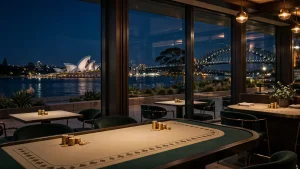
For a CBD club, the useful comparison is therefore narrow: whether the stated address is genuinely within the intended area, whether the relevant facilities are confirmed directly by the venue, and what responsible-gambling arrangements apply. Without those specifics, a ranking would substitute an impression for a usable comparison. A city-centre label can identify an area; it cannot, by itself, establish what is available inside a club.
Parkes Searches and What the Available Facts Establish
Parkes is a Canberra suburb, but the name alone does not establish that a particular venue there has pokies. A location label is not an address, and it cannot confirm what facilities operate at a site. Naming a club or venue without reliable details would turn a geographic association into a claim about its services.
That distinction matters when assessing claims about the best pokies in Canberra. “Best” requires a stated measure and evidence that applies to the games or venues being compared. A suburb name supplies neither. It does not identify a game, confirm that machines are present, or establish any basis for ranking them.
The general mechanics of pokies do not resolve the local question. Each spin is determined independently by a random number generator, and a game’s return setting may differ between casinos. Those points explain why a location name cannot establish that a particular game offers a better return. They do not identify a Parkes venue or support a local ranking.

A useful location claim would need to identify the venue and distinguish its address from the services available there. Without that distinction, “in Parkes” could refer to a nearby business, an area label, or an unverified association. None is enough to treat a venue as a confirmed place to play.
The careful reading is narrow: Parkes may be part of the location being discussed, but that does not establish that pokies are available there. Nor does it show that a game in that area is better than one elsewhere in Canberra. A venue guide or ranking should not be inferred from the suburb name alone.
Cashless Play and the Newcastle Query
Cashless play can refer to different things: a venue’s arrangements for accessing funds, or a bank transfer method used elsewhere. PayID is the latter. It operates as an alias service within Australia’s New Payments Platform (NPP), allowing a transfer to be addressed to an email address, mobile number or ABN rather than relying only on account details.
The NPP is used by all major banks and protects transfers with end-to-end encryption. Those features describe the payment infrastructure; they do not identify a Canberra venue, establish that a particular pokie accepts cashless payment, or confirm that machines are operating in Newcastle. Payment terminology is not a location record.
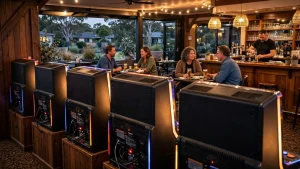
A combined reference to Canberra and Newcastle also does not establish that the same venue, machines or payment facilities exist in both places. The place name and the payment method answer separate questions. A PayID transfer may be made through the banking system, but that fact alone says nothing about where pokies are available.
Nor does PayID support establish that a gambling service is licensed, that a game is fair, or that its return-to-player setting is disclosed. These are separate matters, and the mechanics of sending money cannot settle them. Encryption protects the transfer in transit; it is not a certificate for the recipient or the activity being paid for.
For a cashless-pokies enquiry in Canberra, PayID therefore supplies only a description of a bank-transfer mechanism. It cannot serve as evidence of a local cashless facility. The Newcastle wording does not change that distinction: a payment method is not a venue listing, and it cannot substantiate a ranking of pokies across either city.
Are online pokies legal for Australian players?
Yes, Australians can legally play on offshore sites that accept them, but offering real-money online pokies to Australian residents without a domestic licence is illegal for operators. No Australian-licensed online casino exists, and players have no legal recourse in Australia if an offshore casino refuses to pay winnings.
What is the legal age for online gambling in Australia?
You must be 18 or older to gamble online in Australia.
Do PayID deposits qualify for bonuses?
Yes, PayID is treated like any other qualifying deposit method at the recommended sites.
Can casinos change the RTP of their games?
Yes, some game providers let casinos choose from multiple RTP settings for the same pokie, so its return percentage can differ between casinos.