
Assess the trade-offs before moving crypto
A practical look at offshore access, crypto transfers, promotional conditions and the value risks behind casino balances.

How Offshore Crypto Casinos Fit into the Australian Market
An offshore crypto casino uses cryptocurrency as a way to move funds between a player’s wallet and the platform. Bitcoin and Ethereum are supported by almost all crypto casinos, while offshore platforms typically accept stablecoins and a range of other digital currencies. The exact options depend on the individual site, so “crypto accepted” does not identify a single payment method or a uniform process.
The basic transaction has two sides. A deposit sends cryptocurrency from a personal wallet to an address supplied by the platform; a withdrawal sends cryptocurrency back to a wallet. The casino account may display a balance in crypto, in a fiat currency, or in both. That display affects how a balance is read, but it does not remove the underlying exposure to changes in crypto value.
The payment model behind a crypto balance
A cryptocurrency transfer does not work like a card payment. It is sent through a blockchain network, and the receiving address and network must match the asset being transferred. A mismatch can leave funds unrecoverable. Checking the selected coin, address and network before sending is therefore a basic control, not an optional technical detail.
The wallet also matters. A custodial wallet is managed by a service provider, while a self-managed wallet places control of the keys with its owner. In either case, access to the wallet and accuracy of the transfer details affect whether funds can be sent or received. Cryptocurrency itself does not establish what account checks a casino may require; a crypto payment method is not evidence that identity verification has been removed.
Stablecoins are designed to track the value of another asset, commonly a fiat currency. That design can make their quoted value less variable than that of coins such as Bitcoin, but it does not turn a transfer into cash or eliminate all risk. The asset may still be subject to platform, network and market risks. A balance shown in one currency can also have a different practical value by the time it is converted or withdrawn.

For Bitcoin and Ethereum, broad support across crypto casinos makes them familiar options, but the label alone says little about the terms attached to a transaction. A site may support a coin without supporting every network associated with that asset. The payment screen and the wallet must agree on the precise route. Sending first and checking later reverses the sensible order.
Offshore platforms and local context
Offshore crypto casinos are not licensed in Australia and operate outside the country’s regulatory framework. They do not provide consumer protection through Australian gambling regulation. This is relevant to the payment model because a blockchain transfer does not create a local route for resolving a dispute or recovering a mistaken payment.
Access can also change independently of the payment method. ACMA directs internet service providers to block prohibited offshore gambling sites, and a casino domain may become unavailable without notice. A working wallet does not ensure that a website will remain reachable, and a saved payment address is not a substitute for confirming that a transaction is still intended and correctly directed.

The Australian rules applying to operators and the position of individual players are distinct questions. For the payment mechanics, the practical point is narrower: crypto acceptance does not amount to Australian authorisation, oversight or consumer recourse. The platform remains an offshore service, regardless of whether its account balance is denominated in Bitcoin, Ethereum or a stablecoin.
Gambling is restricted to adults aged eighteen or older. That requirement is not altered by using a digital wallet or by choosing a platform that handles deposits in cryptocurrency.
What the balance represents
A crypto account balance can look like a fixed amount while its value in Australian dollars moves. If the deposited asset changes in market value between deposit and withdrawal, the Australian-dollar value received may differ from the value at the time of deposit. The same issue applies when a balance is held in a volatile coin rather than a stablecoin. A displayed amount is therefore not necessarily a fixed Australian-dollar outcome.
The payment method also does not make casino funds interchangeable with ordinary wallet funds in every practical sense. A transfer out depends on the platform processing a withdrawal, the destination details being correct and the relevant network handling the transaction. These are separate steps, each with its own failure points.
Do
- Check the selected coin, address and network before sending
- Confirm that a transaction is still intended and correctly directed
Don't
- Send cryptocurrency first and check the details later
- Assume a saved payment address is a substitute for confirmation
For an Australian audience, the useful distinction is between the asset and the service accepting it. Bitcoin, Ethereum and stablecoins describe possible transfer assets; they do not describe the platform’s oversight, access stability or protections. A crypto casino remains an offshore service, and a cryptocurrency payment changes the route by which funds move—not the nature of the service itself.
Australia’s Rules: Operators, Players and Access
Australian law separates the conduct of online casino operators from that of individual players. Under the Interactive Gambling Act 2001, providing real-money casino games to people in Australia is prohibited. The restriction covers casino-style services such as slots, poker and table games; using cryptocurrency does not change the nature of the service.
A locally licensed Australian casino cannot offer online casino games to residents. Offshore crypto casinos are not licensed in Australia and sit outside the country’s regulatory framework. That distinction matters: an offshore site is not an Australian-regulated alternative, and Australian authorities do not provide the consumer protections that come with a local regulatory framework. A foreign licence, where one is claimed, does not amount to Australian approval.
The legal position for a player is different. The Interactive Gambling Act targets operators, not individuals who use offshore platforms. It is not a criminal offence for an Australian resident to access an offshore online casino, and gambling there is not itself illegal for the individual. That does not make the service lawful for its operator to provide in Australia, nor does it turn the platform into a regulated local business. Legal exposure and practical risk are separate questions.
 Osko Casino Payments in Australia: What Can Be VerifiedA generic reference to bank payments does not establish Osko availability; this guide separates explicit payment offers from details that still need…
 Casinos That Accept PayPal in Australia: What’s KnownAustralian consumers use cards, mobile wallets and bank-linked services, but familiarity with PayPal does not confirm casino acceptance; this page separates context
ACMA and access restrictions
The Australian Communications and Media Authority (ACMA) administers online gambling rules under the Act. Its role includes monitoring online gambling activity and acting against prohibited services. Where a site is identified as prohibited, ACMA can require internet service providers to block access. The result may be that a domain stops loading for Australian users; a site’s continued visibility at one address is not evidence of Australian authorisation.
A specialist review reported that blocking notices had covered hundreds of domains by mid-2025. That is a dated account of enforcement activity, not a fixed count or a measure that can be assumed to remain current. Domains can disappear from access without notice, and a blocked address may not be the only address associated with a service. A change of domain would not change the underlying legal status.
Blocking is an access measure, not a licensing process. An offshore casino does not become compliant with Australian law because it is reachable, and an inaccessible domain does not establish that the player has committed an offence. Equally, the absence of an immediate block is not an assurance that a platform is lawful, stable or subject to Australian oversight.
What the distinction means in practice
Searches for an Australian crypto casino can return offshore businesses that accept Australian customers, but “Australian” in a site description does not establish an Australian licence. The relevant distinction is where the operator is regulated and whether Australian authorities have jurisdiction over its conduct. Offshore status means local oversight and local consumer protections are absent.
The same applies to claims about fast withdrawals, bonuses or crypto pokies. A payment feature or promotion does not alter the operator’s legal position. Nor does cryptocurrency create an exception to the Interactive Gambling Act. The payment method and the service being provided are separate matters.
Anyone gambling must be at least 18. That age requirement does not resolve the separate issue of operator legality or supply consumer protection where the service is offshore. For an Australian player, the practical position is therefore uneven: the player is not criminalised merely for using an offshore casino, while the operator is not authorised under Australian law to provide online casino games to people in the country. A reachable website, a functioning wallet address and a bonus banner do not narrow that gap.
Crypto Casino Sites and Slots: What Can Be Confirmed
A site described as a crypto casino may advertise slot-style games, but the label alone does not establish what is available, who supplies it or whether the catalogue is current. “Crypto slots” describes a payment association, not a distinct game category with a standard catalogue. A search result, promotional banner or site menu is not enough to confirm that a particular title can be accessed or played.
That distinction matters in Australia. Online casino-style games, including slots, are prohibited interactive gambling services when offered for real money to people physically located in the country. Offshore crypto casinos are not regulated by Australian authorities and do not provide Australian consumer protection. Cryptocurrency does not change the status of the game or the operator.
What a catalogue claim can establish
A visible catalogue can show that a site is presenting games under particular labels at the time it is viewed. It does not, by itself, confirm that every listed game is playable, that availability is the same for Australian visitors, or that the listing will remain in place. Nor does a “crypto slot machine” description establish any special connection between a game’s mechanics and cryptocurrency. The currency used for a transaction and the content of a game are separate matters.

The same caution applies to claims about a complete list of crypto casino sites or slots. A list may reflect a particular publisher’s selection rather than every site or title in existence. Without a reliable basis for completeness, “all” is not a verifiable description. The number of entries on a page cannot make it comprehensive.
Provider names, screenshots and game descriptions may help identify what a page claims to offer, but they do not prove that the catalogue has been independently checked. A useful content assessment distinguishes between what is displayed and what can be confirmed. That distinction is less exciting than a long list; it is also less likely to turn a marketing label into a fact.
Access and availability are not assured
Australian access may also change. The Australian Communications and Media Authority directs internet service providers to block prohibited offshore gambling sites, and domains can disappear from access without notice as a result. A previously visible site address is therefore not evidence of continuing availability. A replacement domain, if encountered, does not establish that the operator or its games have been assessed by an Australian authority.
This is a practical limitation, not a catalogue feature. A description of slots on an offshore site should not be read as an assurance that the site is accessible, lawful for operators to provide in Australia, or subject to local oversight. There is no Australian regulator providing consumer protection for these offshore services.
Separate the game claim from the payment claim
The word “crypto” can make a listing sound more specific than it is. It may refer to a casino’s payment model, while the slot content is described separately. It does not confirm a particular game, a verified catalogue, or a special form of slot. Claims about fairness or game outcomes also need evidence beyond a cryptocurrency logo or a site’s own description.
For Australian residents, the relevant boundary remains the provision of real-money online casino games to people in Australia. The law applies to operators; individual players are not criminally liable simply for accessing an offshore platform. That does not create local protection or turn an offshore catalogue into an approved one.
Gambling is restricted to adults aged 18 or older. Any description of crypto casino slots should be treated as a claim about an offshore service, not as a recommendation or assurance of access. The most that a label can establish is what the site says it offers; it cannot establish independent verification, ongoing availability or Australian regulatory protection.
Assessing Crypto Casino Terms Without a Provider Ranking
A “best” label has little financial value unless the conditions behind it can be checked. For a crypto casino site, the useful comparison is not a star score or a polished summary; it is whether the published terms define the offer, the account obligations and the circumstances in which a balance can be withheld or closed. If those points are vague, a precise ranking would give uncertain information a false appearance of precision.

Offshore crypto casinos are not licensed in Australia and sit outside the country’s regulatory framework. They do not provide Australian regulatory oversight or consumer protection. That matters to any comparison: an attractive term on a site is not equivalent to an enforceable local safeguard. ACMA blocks prohibited offshore gambling sites, and a domain can disappear without notice. Any assessment therefore needs to separate what the site currently states from what can be relied on over time.
What a meaningful comparison can establish
A useful review records the terms that apply to an account and identifies where each statement appears. The central distinction is between an explicit condition and an interpretation. “Eligible users” is not a complete condition if eligibility is not defined. “Subject to review” does not explain what triggers a review or what happens to funds during it. A headline offer or summary should not be treated as the full agreement when the detailed terms qualify it.
The same discipline applies across sites. Like should be compared with like: the same type of account, the same offer category and the same version of the terms. If one site publishes a clear rule and another leaves the point open, that difference is reportable. It does not prove that the first site will honour every claim or that the second will act against a user; it shows only that the available wording supports different levels of certainty.
Terms also need a date. A page can change, and a screenshot or saved copy may not match the conditions shown when an account is opened or an offer is accepted. A comparison that does not identify which wording it assessed can become stale without any visible change to its headline verdict. This is especially relevant where promotional language is more prominent than the conditions governing it.
A practical assessment can therefore separate three categories: stated clearly, stated with qualifications, and not established by the wording available. The third category should remain unresolved rather than being filled with assumptions. A neat table can make that distinction legible, but it cannot make an incomplete set of terms complete.
Why rankings overstate the evidence
A ranked list implies that the entries were assessed on consistent evidence and that small differences between them support an order. That implication is difficult to justify when the comparison depends on terms that can change, promotional claims that may be incomplete, or account decisions that cannot be inferred from public wording. A rating may compress those uncertainties into a single number, but compression is not verification.
The phrase “best crypto casino Australia” can also blur distinct questions. It may refer to the clearest published conditions, the most generous promotion, a particular payment option or some broader expectation of safety. Those are not interchangeable measures. Without a stated basis and comparable evidence, a “best” result says more about the scoring method than about the likely value of an account.
A defensible assessment avoids treating promotional presentation as proof. Claims about fairness, speed, support or reliability require evidence relevant to each claim; one positive feature cannot verify another. Nor does a long list of coins, games or offers establish that the surrounding account terms are favourable. The comparison should report observable wording and avoid converting absence of a complaint into evidence of dependable service.
The age condition is clear: gambling is for adults aged 18 or older. Beyond that threshold, an assessment should not infer that an account will be available simply because a site loads or displays an offer. Access can change, and an offshore operator’s terms do not create Australian regulatory protection. Cryptocurrency does not change that position.

Separating the offer from the account terms
Promotional conditions belong in the comparison, but a headline value is not a measure of net benefit. The written rules determine who qualifies, what actions are required, whether restrictions apply and what may happen if a condition is not met. Those details should be read together rather than reduced to the most eye-catching line. If the wording does not resolve a material condition, the offer cannot be compared on a reliable final-value basis.
The same applies to withdrawal-related language, account closure, verification and dispute handling. These are not minor footnotes when they determine whether a balance can be accessed or an account can continue. A comparison can identify that the terms reserve discretion or leave an issue unclear; it cannot predict how the operator will exercise that discretion in a future case. More certainty in wording is useful, but it is not a substitute for local oversight.
Crypto also introduces a value risk that a terms comparison cannot remove: the amount represented by a coin can change between deposit and withdrawal. The quoted coin balance and its value in Australian dollars are therefore not the same measure. A comparison that records only the number of coins, or treats a promotional amount as fixed value, leaves out a material variable.
The soundest outcome is not a universal winner. It is a bounded account of what the written terms establish, what they qualify and what they leave uncertain. That approach may produce fewer tidy verdicts, but it gives a more accurate basis for judging claims than a list whose order cannot be independently supported.
Deposits, Withdrawals and the Cost of Promotional Terms
A low advertised entry point is not the same as a low-cost transaction. A specialist review reports crypto deposits starting at $5 at listed casinos; a separate specialist review describes minimums of AUD 15 to AUD 30 for most operators it covers, with Bitcoin minimums often at AUD 30 to AUD 50. These are reported figures, not a market-wide schedule. The applicable threshold depends on the operator, currency and payment option, so the amount shown at checkout matters more than a headline minimum.
A deposit also needs to be assessed alongside the conditions attached to any promotion. A “no deposit” label does not establish that funds can be withdrawn without further requirements. The offer’s terms determine eligibility, how any credit may be used, and what must happen before a withdrawal is permitted. If those conditions are unclear or unavailable, the promotional value cannot be calculated reliably. A nominal credit is not equivalent to cash when access to the balance is conditional.
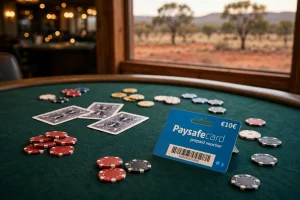
The same arithmetic applies to ordinary deposit offers: compare the amount paid with the amount that can actually be withdrawn after conditions are met. Restrictions on eligible games, maximum stakes, expiry, and withdrawal eligibility may change that calculation, but they should not be assumed to apply universally. Terms need to be read as a complete set rather than inferred from a banner. A promotion with an attractive headline can have little practical value if its conditions make the resulting balance difficult to realise.
Withdrawal assessment should begin with the operator’s stated process and the conditions that apply to the balance. A displayed processing estimate is not a guaranteed arrival time, and the final amount received can differ from the amount requested because cryptocurrency values and transaction costs can change between deposit and withdrawal. The currency’s quoted value at each point is therefore part of the transaction cost, not a cosmetic detail.

Cryptocurrency payments do not make offshore casinos regulated by Australian authorities or provide Australian consumer protection. ACMA blocking can also cause a casino domain to disappear without notice, which may complicate access to account information or support. These operational risks sit alongside the financial terms; a promotional balance does not remove them. Gambling is restricted to adults aged 18 or older.
For a useful comparison, record the required deposit, the currency used, the conditions tied to any promotional credit, and the withdrawal rules in the operator’s own terms. If the minimum differs by payment method, compare like with like rather than treating one low figure as representative. The decision then rests on the amount committed and the conditions for recovering funds, not on the promotional label.
No-KYC Claims and the Limits of Privacy
A “no-KYC” label describes a claim about a platform’s verification process; it is not proof that identity checks will never occur. A crypto casino may advertise limited checks at registration, but that does not establish what it may request later or what conditions could trigger a review. Cryptocurrency is a payment method, not an identity shield.
The practical distinction is between the advertised process and the platform’s actual terms. A claim should be assessed against the operator’s own verification and privacy policies, including whether documents may be requested before an account action is completed. If those terms are unclear, the scope of the claim is unclear too. “No KYC” is not a substitute for a written policy.
Privacy and Anonymity
Privacy is not the same as anonymity. Blockchain transactions can be linked to wallet addresses, and operators may hold account information according to their own internal policies.
For Australian users, the label also says nothing about local oversight. Offshore crypto casinos do not hold Australian licences and sit beyond the country’s gambling regulatory framework. That leaves no Australian consumer-protection scheme attached to their verification promises. The Australian Communications and Media Authority monitors online gambling activity, including activity involving cryptocurrency; using digital assets does not put a platform beyond its attention.
Privacy is also not the same as anonymity. A transaction recorded on a blockchain can be linked to a wallet address, while an operator may hold account information under its own policies. Those are separate records, but neither supports a blanket promise that a person cannot be identified. A platform’s use of cryptocurrency cannot establish that its account process is private, and a claim of limited verification cannot establish that no information will be collected.
Access can change as well. ACMA directions to internet service providers can result in prohibited gambling domains being blocked, so a site address may stop working without warning. A disappearing domain does not demonstrate that account or payment records have disappeared with it.
Age verification remains a requirement: gambling is for people aged 18 or older. A no-KYC description should not be read as an exemption from that standard or as assurance that age will not be checked. The useful question is not whether a site uses the label, but what its published policy says about identity checks, data handling and account restrictions. If the policy leaves those points open, the privacy claim leaves them open too.

Reviews, Free Spins and Offers: Evidence Before Claims
A review is useful only to the extent that its claims can be checked. A detailed description of an offer is not proof that the offer is available, applies to Australian visitors or remains unchanged. Promotional wording should be separated from the terms that determine eligibility, expiry, game restrictions and withdrawal conditions. If those conditions cannot be read before registration, the offer’s value cannot be calculated reliably.
The same standard applies to free spins attached to crypto casino promotions. A displayed spin count, headline value or “free” label does not establish what can be withdrawn. The relevant evidence is the complete set of conditions, including which games qualify, whether winnings are restricted and what steps are required before funds can be withdrawn. Without those details, a stated benefit is a claim, not a cash equivalent.
Reviews also need a clear basis for their conclusions. A review that describes personal testing should make clear what was tested and when; a comparison should distinguish observed terms from promotional statements. Affiliate relationships matter because a positive verdict may generate revenue for the publisher. That does not make every review inaccurate, but it makes transparent sourcing and specific, reproducible details more useful than a star rating or an unqualified “best” label.
For Australian readers, an offshore site’s review or offer page is not evidence of Australian regulatory approval. Offshore crypto casinos are not regulated by Australian authorities and do not provide Australian consumer protection. ACMA’s blocking notices can also cause domains to disappear without notice, so a review that once described a site may no longer match the address or terms currently presented. None of this makes promotional claims safer to rely on.
Cryptocurrency adds a further uncertainty: its value can change between deposit and withdrawal. A nominal amount of crypto is not a stable measure of its Australian-dollar value, so an apparent promotional gain may not translate into the same value when converted or spent.
Are gambling winnings taxed in Australia?
Recreational gambling winnings are generally not taxed as income, but cryptocurrency is treated as a capital gains tax asset by the ATO.
Does a "no-KYC" label guarantee privacy?
No, it is a claim about the registration process and does not establish that identity checks will never occur or that the platform is anonymous.
What happens if the wrong network is used for a transfer?
Sending cryptocurrency through an incompatible network can result in funds being lost, as these transfers may not be reversible.
Any gambling-related material must be understood as applying only to adults aged 18 or older. Review language should not be mistaken for a recommendation or assurance: the only meaningful comparison is between conditions that can be independently checked, and claims whose terms remain unclear have no dependable value.
Accepted Cryptocurrencies, Networks and Transfer Costs
The currencies listed across cryptocurrency casinos commonly include Bitcoin (BTC), Ethereum (ETH), Tether (USDT) and Litecoin (LTC). Ripple and other altcoins may also be supported; some specialist casino reviews additionally identify Solana (SOL) and Dogecoin (DOGE) among possible options. These are not universal menus. A coin’s presence on a payment page does not establish that every network carrying it is accepted.
The network is part of the payment instruction, not a technical footnote. Before a deposit, the casino’s stated network must match the network selected in the sending wallet. The same check applies to withdrawals: the destination wallet must support the network used for the transfer. Sending through an incompatible network can result in funds being lost, and crypto transfers may not be reversible.

Tether illustrates why the distinction matters. A casino may support the currency on one network but not another. A specialist review describes TRC-20 transfers as costing cents, but that figure is not a universal fee quote: the network, wallet and platform conditions affect the amount charged. Litecoin and Tether on TRC-20 are also recommended in a specialist review for quick confirmation and low fees. Those descriptions should be treated as source-specific, not as a settlement promise. Bitcoin may suit a larger, less frequent withdrawal when a wait of half an hour is acceptable, according to another specialist review; actual processing conditions are platform-dependent.
A specialist review reports that some online casinos list ten or more cryptocurrencies for deposits and withdrawals. The count is less useful than the exact asset-and-network combinations available for both directions. A deposit route does not prove that withdrawals use the same route, or that the casino supports a particular wallet.
Crypto prices can move between deposit and withdrawal, changing the Australian-dollar value of the balance even when the coin amount is unchanged. Offshore crypto casinos are not regulated by Australian authorities and offer no Australian consumer protection. ACMA blocking can also make a casino domain disappear without notice. These payment mechanics do not make a platform secure or remove verification requirements. Gambling is restricted to adults aged 18 or older.
Aussie Crypto Casinos in 2026: Tax and Value Risk
Operators
Choosing a crypto casino in Australia means checking the details that are available before deciding where to play. This list provides a concise reference to each operator’s stated licence, deposit minimum or payout timing where known.
-
LuckyVibe
- License
- Curacao Gaming Control Board OGL/2023/176/0095 (Hollycorn N.V.)
LuckyVibe lists a Curacao Gaming Control Board licence, OGL/2023/176/0095, held by Hollycorn N.V.
-
Playfina Casino
- License
- Curacao eGaming (Hollycorn N.V., since 2017)
- Min. deposit
- A$20-30 (depends on the offer)
Playfina Casino lists a Curacao eGaming licence held by Hollycorn N.V., which has operated since 2017. Its minimum deposit is A$20–30, depending on the offer.
-
MrPacho
- Payout speed
- crypto 30-120 minutes, fiat 24-72 hours
- Min. deposit
- A$30
MrPacho lists crypto payouts of 30–120 minutes and fiat payouts of 24–72 hours. The minimum deposit is A$30.
-
Uptown Pokies
- License
- Curacao (operating since 2017)
- Min. deposit
- A$20
Uptown Pokies operates under a Curacao licence and has been operating since 2017. Its minimum deposit is A$20.
-
Wild Tokyo
- License
- Curacao
- Payout speed
- crypto 30-60 minutes, fiat 1-5 days
- Min. deposit
- A$10
Wild Tokyo lists crypto payout times of 30–60 minutes and fiat payout times of 1–5 days. Its minimum deposit is A$10.
-
Bizzo Casino
- License
- Curacao Gaming Control Board (TechSolutions Group N.V.)
Bizzo Casino lists a Curacao Gaming Control Board licence held by TechSolutions Group N.V.
-
Thor Casino
- License
- Curacao – Antillephone N.V. (Versus Odds B.V.)
- Min. deposit
- EUR 20
Thor Casino lists a Curacao licence from Antillephone N.V. (Versus Odds B.V.). Its minimum deposit is EUR 20.
-
Lucky Dreams
- License
- Curacao
- Min. deposit
- A$20 (POLi)
Lucky Dreams lists a Curacao licence and a minimum deposit of A$20 via POLi.
-
WinSpirit Casino
- License
- Curacao eGaming OGL/2024/923/0383 (Antillephone N.V.)
- Min. deposit
- A$30
WinSpirit Casino lists a Curacao eGaming licence, OGL/2024/923/0383, held by Antillephone N.V. Its minimum deposit is A$30.
-
Vegaz Casino
- License
- Curacao OGL/2024/1335/0780
- Min. deposit
- EUR 20
Vegaz Casino lists a Curacao licence, OGL/2024/1335/0780, and a minimum deposit of EUR 20.
Australian recreational gambling winnings are generally not taxed as income. Cryptocurrency can create a separate tax issue: the Australian Taxation Office treats it as a capital gains tax asset, so using or disposing of it may have consequences even when the underlying gambling win is not taxable.
A deposit is not necessarily tax-neutral. Sending cryptocurrency to a casino counts as a disposal and is technically a CGT event. The relevant calculation depends on the asset’s cost base and value when disposed of; a deposit can therefore matter independently of any later result at the casino.
If cryptocurrency is received as a gambling win, the ATO does not treat the prize as ordinary income. Its value when received becomes the cost base for a later capital gains calculation. Selling, swapping or spending that cryptocurrency can then trigger CGT rules. The distinction is between receiving a gambling prize and disposing of the asset afterwards, not between cashing out at a casino and leaving the balance there.
Price movement adds another exposure. The Australian-dollar value of a deposit may differ from the value of a later withdrawal because cryptocurrency prices can change while funds are held or transferred. A nominally unchanged coin balance does not guarantee an unchanged Australian-dollar outcome.
The practical record should separate each stage: acquisition cost, deposit disposal, any crypto received as a win, and later sale or spending. These events are not one tax calculation simply because they relate to the same casino session. A tax professional can assess the individual circumstances; the general treatment of recreational winnings does not remove the CGT implications of cryptocurrency transactions.
Which crypto is best for casino deposits and withdrawals?
Litecoin and Tether on the TRC-20 network are practical choices for faster payouts, with quick confirmations and low fees. Bitcoin may suit larger, less frequent withdrawals, though it can involve a longer wait.
Is using a crypto casino legal for Australian players?
Yes, gambling at an offshore online casino is not a criminal offence for an individual player in Australia. However, offshore crypto casinos are not licensed in Australia, and online casino games may not be offered to Australians by Australian-licensed operators.
Do crypto-friendly casinos still require identity verification?
A crypto payment does not remove or rule out identity checks; the payment method alone does not determine what checks a casino may require.
Can I withdraw Bitcoin in Australia?
Yes, a Bitcoin withdrawal can be sent from a casino to a Bitcoin wallet. Confirm that the withdrawal address and network match before the transfer.
Can Australians use Bitcoin to gamble online?
Yes, individual Australians are not committing a criminal offence by gambling at an offshore online casino, and Bitcoin is commonly supported. These platforms are not licensed in Australia and do not provide Australian regulatory consumer protections.