
Check the terms before comparing casino stays
Room rates, casino access and resort amenities are separate details, so compare only what a selected booking actually confirms.

Casino Hotel Rooms and Deals: What the Available Information Can Confirm
A casino hotel stay combines two things that should be assessed separately: accommodation sold by a casino-linked property and access to the casino itself. A hotel’s name, branding or location does not by itself establish that rooms are on site, that a booking includes casino benefits, or that a particular deal is available. Those are separate terms, and the distinction matters before comparing prices.
Room descriptions need to be read as booking terms rather than inferred from a property’s casino connection. A room category, view, bedding arrangement, included services and cancellation conditions are meaningful only when stated for the selected dates and rate. Without those details, it is not possible to make a sound comparison between advertised prices. A low headline rate can be less useful than a higher one if the conditions differ; the total payable and the restrictions determine the value.
The same calculation applies to casino hotel deals. A promotion may be tied to particular dates, room categories or booking channels, and the word “deal” does not establish what is included. Before treating a rate as a saving, its ordinary comparison price, inclusions, taxes or fees, payment timing and cancellation terms need to be clear. Any casino-related benefit would also need its own written conditions. A hotel booking and an offer connected with casino play are not interchangeable products.
Operators
Choosing an online casino for Queensland in 2026 calls for checking the available operator details before deciding where to play. This list provides a concise reference to the licensing and payment information available for each option.
-
LuckyVibe
- License
- Curacao Gaming Control Board OGL/2023/176/0095 (Hollycorn N.V.)
LuckyVibe lists a Curaçao Gaming Control Board licence, OGL/2023/176/0095, held by Hollycorn N.V.
-
Playfina Casino
- License
- Curacao eGaming (Hollycorn N.V., since 2017)
- Min. deposit
- A$20-30 (depends on the offer)
Playfina Casino lists a Curaçao eGaming licence held by Hollycorn N.V., which has operated since 2017. Its minimum deposit is A$20–30, depending on the offer.
-
MrPacho
- Payout speed
- crypto 30-120 minutes, fiat 24-72 hours
- Min. deposit
- A$30
MrPacho lists crypto payouts of 30–120 minutes and fiat payouts of 24–72 hours. The minimum deposit is A$30.
-
Uptown Pokies
- License
- Curacao (operating since 2017)
- Min. deposit
- A$20
Uptown Pokies lists a Curaçao licence and has been operating since 2017. Its minimum deposit is A$20.
-
Wild Tokyo
- License
- Curacao
- Payout speed
- crypto 30-60 minutes, fiat 1-5 days
- Min. deposit
- A$10
Wild Tokyo lists a Curaçao licence and a minimum deposit of A$10. Its stated payout times are 30–60 minutes for crypto and 1–5 days for fiat.
-
Bizzo Casino
- License
- Curacao Gaming Control Board (TechSolutions Group N.V.)
Bizzo Casino lists a Curaçao Gaming Control Board licence held by TechSolutions Group N.V.
-
Thor Casino
- License
- Curacao – Antillephone N.V. (Versus Odds B.V.)
- Min. deposit
- EUR 20
Thor Casino lists a Curaçao licence from Antillephone N.V. (Versus Odds B.V.). Its minimum deposit is EUR 20.
-
Lucky Dreams
- License
- Curacao
- Min. deposit
- A$20 (POLi)
Lucky Dreams lists a Curaçao licence and a minimum deposit of A$20 via POLi.
-
WinSpirit Casino
- License
- Curacao eGaming OGL/2024/923/0383 (Antillephone N.V.)
- Min. deposit
- A$30
WinSpirit Casino lists a Curaçao eGaming licence, OGL/2024/923/0383, from Antillephone N.V. Its minimum deposit is A$30.
-
Vegaz Casino
- License
- Curacao OGL/2024/1335/0780
- Min. deposit
- EUR 20
Vegaz Casino lists a Curaçao licence, OGL/2024/1335/0780. Its minimum deposit is EUR 20.
This is especially relevant when a listing describes a hotel as being “near” a Queensland casino. Nearby accommodation is not necessarily owned by, operated by, or formally partnered with a casino. Nor does proximity establish a shuttle, bundled rate, priority access or any other benefit. Those claims need to be attached to the specific property and booking, not inferred from a map pin or a shared destination name. On-site accommodation and independent hotels in the surrounding area belong in different comparison columns.
A practical comparison can be kept to a short set of terms:
- Property relationship: whether the hotel is part of the casino property, officially connected to it, or independent.
- Room and rate: the exact room category and the total price for the chosen stay.
- Inclusions: only services or benefits expressly listed in the offer.
- Conditions: payment, cancellation and any restrictions on dates or booking method.
If any of these terms are unclear, the advertised figure is not yet a complete price. It is a starting point for checking, not a final amount.
Opening hours should also be treated as venue-specific, not as a feature of the hotel rate. A hotel may operate independently of casino gaming hours, while reception, check-in and other services may have their own arrangements. A general label such as “casino hotel” cannot establish when a particular casino is open, whether access is available at a given time, or how those hours relate to a room booking. Current operating information needs to be checked against the relevant venue’s own published details before plans are based on it.
The phrase “best casino in Queensland” does not resolve the accommodation question. A strong hotel offer is one whose location, room, total cost and conditions are transparent; casino branding alone supplies none of those calculations. For a Queensland stay, the defensible comparison is between specific properties and written rates, with on-site rooms kept distinct from independent accommodation nearby. If the booking terms do not state what is being purchased and what restrictions apply, the deal cannot yet be valued.
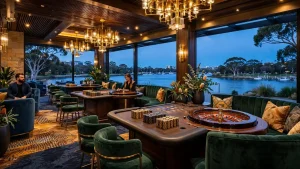
Poker Rooms, Tournaments and Gym Facilities
Poker, Electronic Gaming Machines (EGMs) and gym access are separate parts of a venue’s offer. A poker room refers to an area for poker played against other participants; it does not mean a room for accommodation, and it should not be confused with a general gaming floor. A tournament is a particular organised format, not evidence that cash games or regular poker sessions are also available.
For a Queensland casino, the practical distinction matters before a visit is planned. A poker room may have its own entry conditions, session arrangements and operating times. Tournament information, where published, needs to identify the event itself and the conditions for taking part. A broad venue description or a reference to gaming does not establish either detail. Nor does a listing for casino rooms tell anything definite about poker: the word “rooms” can refer to accommodation, facilities or other spaces, depending on context.
What poker information needs to specify
A useful tournament notice should make clear whether registration is open, when play begins, where the event is held and what participation requires. The format also matters: a scheduled tournament and a cash game are not interchangeable, and a poker event is not the same as playing pokies. Without event-specific terms, a date or headline alone does not settle whether a particular session is suitable or available.
The same care applies to a dedicated poker room. A venue may use poker in general promotional language without describing a separate room, its access arrangements or the sessions it supports. Those are distinct claims. A confirmed room does not, by itself, establish a tournament calendar; a tournament announcement does not establish that poker is offered on other dates.
Searches for poker at a Queensland casino can also blur venue-level and state-level information. Rules cited for poker machines in New South Wales are not evidence of the facilities or operating arrangements at a Queensland casino. Poker machines and poker played as a table game are different activities, and information about one should not be used to fill gaps about the other.
Gym access is a separate facility question
A gym may be part of a hotel or resort, but that association does not establish access for casino visitors. The relevant details are whether the facility exists at the specific property, who may use it, and whether access depends on a stay, membership or another condition. Hours and any access restrictions are also material: the word “gym” in a general description cannot settle them.
 Best Casino in Sydney: Rooms, Dining and Stay DetailsExplore casino hotel rooms, dining, parking and venue facilities. Offers may apply only to selected dates or room types, so compare stay…
 Darwin Casino Guide to Development, Events and StaysLearn how to assess development, event and employment claims, alongside practical information on rooms, dining, access and casino rules in Australia.
This distinction is especially important when casino and hotel services appear together in a listing. A facility associated with accommodation is not automatically available to people attending a poker event, and a casino visit does not imply access to hotel amenities. Each facility needs its own terms.
The same principle applies to searches combining a casino with a sports bar or asking whether the venue is open now or today. Those phrases concern different questions: a sports bar’s presence and service are not proof of poker availability, while a venue’s general opening status does not confirm that a specific room, event or gym is operating. Current hours and event schedules can change independently.
A dependable venue description separates the claims rather than bundling them under “casino facilities”: poker room, tournament details, gym access, bar service and general opening status each require their own information. For planning purposes, the useful unit is not the venue label but the specific facility and its applicable conditions. Without that separation, a broad listing can sound comprehensive while leaving the relevant terms unresolved.
Buffet Breakfast, Resort Facilities and Rewards
“Buffet breakfast” describes a service format, not a complete offer. The useful comparison is the total cost and the conditions attached: whether breakfast is included in a room rate, charged separately, available only with a particular package, or subject to a booking requirement. A headline that says “breakfast included” is not enough to establish what is served or when. Those details belong in the rate conditions or the venue’s current service information.
A buffet and a breakfast menu are also not interchangeable. A buffet generally indicates a self-service arrangement, while breakfast may be served from a menu or supplied in another format. A Queensland casino listing using either term should be checked for the actual service, the days it operates and any restrictions linked to the booking. If the meal is an add-on, the relevant figure is the total payable for the stay and breakfast together—not a room price presented without the extra cost.
The same accounting applies to a casino resort. “Resort” is a broad description, not a specification of included facilities. A package may combine accommodation with access to amenities, or it may simply use the resort label while charging separately for services. Each inclusion needs to be identified in the offer itself, along with any conditions on access. A facility named in general property information should not automatically be treated as part of a particular booking.
Rewards: value depends on the terms
A rewards programme has value only where its earning and redemption rules produce a usable return. The headline benefit is not the calculation. The relevant terms are how points are earned, which transactions qualify, what points can be exchanged for, whether they expire, and whether restrictions apply to redemption. Without those rules, a rewards label cannot be translated into a dollar saving.
The clean comparison is between the amount spent to qualify and the benefit actually used. A discount that requires additional spending may cost more than paying the ordinary price. A points balance that cannot be redeemed for a planned purchase has no immediate cash value. Rewards should therefore be treated as conditional reductions in cost, not as money already earned.
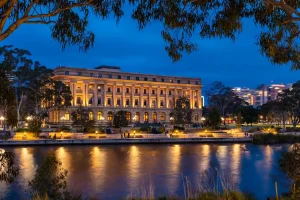 Adelaide Casino Hotel Stays: Room and Booking DetailsCompare Adelaide casino hotel offers by total room cost, payment timing and booking conditions; a casino name alone does not confirm room…
 Hobart Casino Poker Rooms and Tournament InformationLearn how live poker differs from pokies and what an event notice should specify before a room or tournament is treated as…
Membership terms should also be kept separate from accommodation or breakfast terms. A room offer may have its own booking conditions, while rewards may apply only to eligible spending or selected services. Combining the two in a single estimate without checking eligibility can overstate the value of the stay.
Employment is a separate decision
Casino employment searches concern a different set of terms from resort packages. A job advertisement is useful only when it identifies the role, location, employment basis, pay arrangement and application conditions. The word “casino” alone does not establish that a vacancy is at a particular Queensland venue, and a general careers page is not evidence that a suitable position is currently open.
For a practical comparison, the relevant figures are the stated pay and expected hours, where supplied, alongside the employment conditions. Benefits should be counted only when the advertisement explains eligibility and value. A role described as part of a resort operation may involve work beyond gaming areas; the job description, not the broad venue label, determines the actual duties.
Buffet breakfast, resort facilities, rewards and employment are separate offers with separate conditions. Their value can be assessed only against the specific service or role being considered, its stated cost, and the rules that govern access or payment.
Parking and the Limits of Online Casino Claims
Parking is a practical part of a casino visit, but a search for parking, valet service or complimentary spaces does not establish what a Queensland venue provides. Availability, access arrangements, charges and any conditions can change; none should be treated as confirmed without current information from the venue. A claim that parking is free is especially incomplete if it does not state who qualifies and what terms apply. The final cost is the relevant figure, not the word “free” in a heading.
The same distinction applies to online services. A casino’s physical presence in Queensland does not mean it can lawfully offer online casino games to people in Australia. Under the Interactive Gambling Act, operators based in Australia cannot provide online casino services to customers here. The restriction covers games such as pokies, blackjack and roulette. A venue’s dining or other in-person facilities are a separate matter from whether an online casino service may be offered.
Offshore platforms occupy a different legal position, but that does not make them Australian-regulated alternatives. Australian players are not generally liable simply for using an offshore casino, yet those platforms are not regulated under Australian law. That leaves a material difference in oversight and recourse if a dispute arises. An offshore operator’s terms do not provide the same protection as Australian regulation, and funds may be at risk if the business fails.
Bonus figures also need to be read as contractual terms rather than as cash value. Conditions may impose wagering requirements, restrict withdrawals or allow winnings to be voided. A displayed offer therefore cannot be assessed from its headline alone; the qualifying conditions and the amount ultimately withdrawable determine its practical value.
A further complication is location technology. Some online platforms use an IP address to identify a player’s apparent country and may block access from excluded regions. A game may also fail to load because of regional restrictions. Using a VPN to reach a region-blocked pokies site breaches the operator’s terms of service and may result in account suspension. It does not change the platform’s regulatory status or create Australian consumer protections.
 Western Australia Casino Searches: What They EstablishLearn what searches can—and cannot—confirm about casino hotels, poker, online access, nearby stays and venue details; listings alone do not prove a…
 Geelong pokies: what open-now listings can confirmLearn why a venue’s open status does not confirm that its pokies are operating, and what searches by area or venue can…
For a physical casino visit, parking claims should be checked against current venue information before travel, including whether any fee or eligibility condition applies. For online casino claims, the key distinction is not whether a website accepts a visitor or displays games. It is whether the service can lawfully be supplied to someone located in Australia, and whether the operator is regulated here. An offshore site may be accessible while still falling outside Australian regulation; access alone is not evidence of local approval.
Accommodation Near a Queensland Casino
A stay near a Queensland casino is a separate booking decision from a room sold by the casino itself. A nearby property may be independently operated, with its own reservation terms and no connection to the venue beyond its location. That distinction matters: proximity does not establish that a casino owns, endorses or bundles accommodation with a hotel.
The first calculation is the full cost of the stay, not the headline nightly rate. A comparison should use the same dates, number of guests and room requirements across properties. It should also account for any charges shown before payment, the cancellation terms and whether the quoted rate includes the services that matter for the trip. A low displayed price can cease to be the lowest total once conditions are applied.
Do
- Use the same dates and guest count for all property comparisons
- Check the exact street address and route to the venue
- Account for all charges and cancellation terms in the total price
Don't
- Rely on headline nightly rates without checking the final payable amount
- Assume proximity implies a formal partnership or bundled benefits
- Treat a discount label as proof that a booking is cheaper
Distance needs a practical definition. “Near” may mean a short walk, a brief drive or simply a property in the same broader area; those are not interchangeable descriptions. Before booking, the venue’s exact location and the accommodation’s address should be checked against a map, then the route should be assessed for the actual mode of travel. A distance stated without a route or travel context is a weak basis for comparing stays.
Deals require the same arithmetic. A promotional rate is useful only if its final price and conditions beat a comparable standard booking. The relevant checks are the dates covered, minimum-stay rules, included services, payment timing and cancellation conditions. A discount label does not establish that a booking is cheaper, and a casino promotion should not be assumed to apply to independently operated accommodation.
For a Queensland casino visit, accommodation comparisons can be kept to a short decision record:
- the property’s street address and route to the venue;
- the total price for the intended stay, including disclosed charges;
- the room and services included in that price;
- payment, amendment and cancellation conditions;
- any promotion’s eligibility dates and restrictions.
This avoids treating a casino-related label as proof of a package or special rate. It also keeps the comparison auditable: each option can be assessed against the same dates and requirements, rather than against a headline figure with different conditions.
The phrase “Queensland casino accommodation” can describe more than one arrangement: a room at a casino hotel, a separate property nearby, or a booking promoted in connection with a venue. Those categories should not be collapsed. A nearby stay is not automatically a casino hotel, and a hotel booking is not automatically a casino deal. The operator named on the accommodation listing and the party responsible for the booking terms are the practical points to identify.
No particular nearby property, rate or offer should be treated as established without checking the actual booking details for the intended dates. That is not a minor qualification: availability and price are time-specific, while the decision depends on the final payable amount and the conditions attached to it. A reliable comparison therefore ends with the booking terms, not the promotional wording.
 Brisbane Casino Stays: What Listings Can ConfirmLearn how to distinguish casino-run hotels, packages and independent bookings; the available text does not verify Brisbane rates or inclusions.
 Best pokies in Brisbane: checking hours and accessLearn why venue opening hours do not confirm overnight access or pokies availability, and why location and payment claims need checking.
Contact Details, Bars and Live Entertainment
A Queensland casino’s contact number should be treated as a venue-specific detail, not inferred from a general casino listing. Before relying on a phone number, match it to the operator’s own current contact page or another channel clearly identified by the venue. Third-party directories can retain outdated details, combine several departments under one listing or point to a general enquiry line rather than the place being sought.
The same distinction matters for maps. A map pin can indicate a broad destination without confirming the correct entrance, reception point or route inside a larger property. An operator-published map, where available, is more useful for locating a named venue or service; the pin alone does not establish that the destination is open or accessible. Car-park arrangements are a separate practical question and should not be inferred from a map marker.
A search for a casino bar does not establish which bars operate at a particular Queensland venue, what they serve or when they are open. Those details can change, and a listing for a bar is not a promise that it will be available on a particular visit. The useful checks are the venue’s own current listings and any stated entry, booking or service conditions. Restaurant information is a separate matter: a bar listing does not confirm dining options or menus.
Concert information also needs to be tied to a specific venue and date. A past event, an old promotional page or a ticket reseller’s listing does not establish a current programme. Before making plans, the event listing should identify the venue, performance date, ticket arrangements and any conditions of entry. If the operator’s page and a third-party listing differ, the operator’s current notice is the more direct reference; the discrepancy itself is a reason not to assume that tickets or event details are settled.
Searches for baccarat or craps are likewise not evidence that either game is offered at a particular Queensland casino. Game availability is a venue-level detail, not something established by a broad description of casinos or by an old page. The same applies to the format of play, operating times and any participation conditions. These terms should be confirmed through current information from the relevant operator rather than carried over from another property.
For contact enquiries, the department matters as much as the number. A general switchboard, event venue and bar may use different channels, but no number should be assumed from a search result alone. A reliable listing should make clear which organisation publishes it and what type of enquiry it handles. Where that is unclear, the contact detail is not yet a sound basis for travel or booking decisions. In practical terms, a venue name, a current operator page and a clearly matched contact channel are the minimum useful combination; the rest is packaging.
 Best Casino in Tasmania: Hotels, Packages and DetailsCompare casino-linked stays by total cost, room type and cancellation terms, and assess whether package extras offer value beyond a room-only rate.
 Pokies in South Australia: RTP and Access ChecksLearn why RTP is a long-run comparison, not a personal forecast, and why the same pokie can have different settings across casinos.…
Opening Hours, Events and Development Updates
“Open” is not a single status. A venue may have a published operating schedule, a temporary closure, or a reopening announcement that applies only to part of its operations. Those distinctions matter when assessing whether a Queensland casino is currently open. A dated notice should identify the venue and the area or service affected; an old general listing cannot establish today’s status.
Reopening information needs the same separation. An announced intention to resume operations is not equivalent to a confirmed date, and a confirmed date does not establish that every facility will be operating then. The useful details are the scope of the change, its effective date and any later notice that replaces it. Without those terms, “reopening” describes a headline, not a usable operating commitment.
Event information is also date-sensitive. A listing should be tied to a named event and a specific date, with any changes or cancellations reflected in the current notice. A general entertainment page may describe a programme without confirming what is scheduled on a particular night. Past event coverage establishes that something happened; it does not establish a future calendar. For planning purposes, the distinction between an announcement and a current listing is more material than promotional wording.
Development updates require a different standard of evidence. A proposal, public announcement, planning process and completed project are separate stages. An announced project does not by itself confirm approval, construction or a change to the venue’s operating arrangements. Any account of development should therefore specify what stage has actually been reached and when that status was reported. Otherwise, a future possibility can be mistaken for a present facility.
Employment information has its own date and scope. A vacancy notice is useful only while applications remain open and only for the role and location it names. General careers material may describe an employer or its recruitment process, but it does not establish that a Queensland casino currently has a particular job available. Application deadlines and status can change independently of broader venue announcements.
A concise review of current status should keep these categories separate:
| Topic | Detail that makes a notice useful |
|---|---|
| Opening status | The venue or area covered and the date the status applies |
| Reopening | The confirmed date, scope and any conditions stated |
| Events | The named event, scheduled date and current cancellation or change notice |
| Development | The project stage and the date of the update |
| Employment | The role, location and closing date for applications |
These distinctions also limit what a general review can reasonably conclude. It can assess whether a claim is current, specific and consistent with a dated notice; it cannot turn an undated statement into a present operating fact. For Queensland casino opening hours, events, employment and development, the date and scope of each announcement carry the practical value. Promotional language carries none on its own.
Spa, Address and Dress-Code Information
A Queensland-wide label is not a usable street address. It does not identify a particular casino, confirm where its entrance is, or establish whether a spa operates on the same site. Those details need to be tied to a named venue before they can support travel planning. An address copied from an old listing may also point to an office, a former site or a nearby business rather than the casino entrance.
Spa searches require the same distinction. A day spa in the surrounding area is not necessarily a casino facility, and a spa business sharing a resort precinct does not by itself establish that casino guests have access. Before treating a spa as an on-site amenity, the operator’s own current venue information should identify it and explain any access conditions. Without that confirmation, treatments, facilities, prices and booking arrangements should not be assumed.

Dress requirements are also venue-specific. A general expectation about casino attire cannot confirm the rules at a particular Queensland venue, including whether conditions differ between gaming areas and other parts of a property. The current venue policy is the relevant reference; an old visitor comment or an unrelated casino’s rules cannot substitute for it. This is a small detail until entry is refused, at which point it becomes a very practical one.
“Casino games” can refer to games at a physical venue or to online casino-style services. Those are different settings, not interchangeable descriptions. Under the Interactive Gambling Act 2001, operators cannot provide real-money online casino games—including slots, poker and table games—to people located in Australia. A venue’s address or physical facilities do not establish that an online service is lawful or available.
Career information should likewise be linked to the actual employer. A role advertised by a contractor may be for work at a casino site without being a casino-operator position. Current vacancies, eligibility requirements and application steps should be confirmed through the named employer’s recruitment information rather than inferred from a general Queensland casino listing.
For a reliable visit plan, the useful record is specific: the venue name, its current official address, the applicable entry and dress conditions, and confirmation of any spa access directly from the operator. Until those particulars are available, a statewide search phrase cannot settle them.
Restaurants at Queensland Casinos
A restaurant associated with a Queensland casino should be assessed as a separate venue, not assumed to be part of a standard casino offering. The label may refer to a dining room inside a casino complex, a nearby business, or a bar that serves food. Those are different arrangements, with different menus, booking processes and opening times.
The distinction matters when comparing options. A restaurant’s location determines whether casino access is relevant to the visit; its own terms determine whether a table can be booked, what the menu covers and when service is available. A listing or photograph alone does not settle those points. A current menu and booking page are more useful than a short directory description, particularly when prices, service hours or seasonal offerings may change.
A rooftop bar is also not automatically a restaurant. It may provide drinks, food, or both, and the name does not establish whether meals are available or whether reservations are accepted. The same applies to venues described broadly as dining or hospitality options: those labels do not specify the type of service. For a planned meal, the relevant details are the current food offering, service period, reservation conditions and any stated entry requirements.
Search results can also blur the difference between a casino venue and a restaurant nearby. Proximity does not establish shared ownership, access arrangements or a connection to casino operations. A restaurant’s own business listing is the appropriate place to confirm its address and terms; the casino’s official information can clarify whether it identifies the restaurant as part of its complex. If the two descriptions differ, the more specific venue information is the better basis for planning.
For a cost comparison, the useful figures are the listed menu prices and any disclosed charges or booking conditions. A general description such as “fine dining” does not give a final bill, just as a menu headline does not confirm which dishes are available on a particular service. The final amount depends on the items ordered and the venue’s stated terms.

Queensland casino dining should therefore be compared venue by venue rather than treated as one uniform restaurant offer. Names, menus, hours and booking rules belong to the individual business and can change independently. A reliable decision rests on the current details for the particular restaurant, not on the casino label alone.
Food Options and Pool Access
Food availability and pool access are separate practical questions, but neither should be inferred from a casino’s name, size or resort-style branding. A reference to a Queensland casino does not, by itself, establish that the venue has a food court, casual takeaway counters or a swimming pool. Those facilities need to be confirmed for the specific property before they are treated as part of a visit.
A food court is different from a collection of restaurants: it generally implies a shared area with multiple food counters and seating. A venue listing that mentions dining does not confirm that format, nor does it establish what kinds of food are available, whether service is operating on a particular day or whether access is limited to guests. General food options should therefore be described only where the venue’s current information identifies them clearly. Restaurant names, menus and booking details are separate matters.
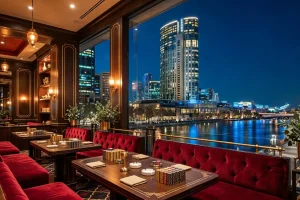
Pool access also requires a specific check. A pool shown in material about accommodation may belong to a hotel, be reserved for its guests, or be unavailable to casino visitors. The existence of a nearby pool would not establish access through the casino. The relevant details are the facility’s location, who may use it, any entry conditions and whether it is open at the time of the visit. Without those particulars, “casino pool” is a search phrase, not a confirmed amenity.
For a Queensland casino visit, food and pool arrangements should be checked against current information from the venue or the relevant accommodation provider. A useful listing distinguishes confirmed facilities from nearby alternatives and states any access conditions plainly. If it does not, the prudent budget is to treat food-court access and pool use as unconfirmed rather than include them in the plan. The distinction is modest; the difference between a facility and an assumption is not.
What are the bonuses and wagering requirements?
Free-spin winnings commonly carry wagering requirements of 20x to 50x; one stated requirement is 30x before withdrawal. Pokies typically contribute 100% toward wagering requirements.
Which pokies are geo-blocked from Australia?
NetEnt blocked its wide-area progressive jackpot games from Australia, including Mega Fortune and Hall of Gods. NYX Gaming/Next Gen titles such as Foxin’ Wins and Doctor Love were also region-blocked.
How does region blocking work?
Casinos or game providers can use a player’s IP address to identify their location and block access from excluded countries. Blocked games may not appear in the lobby or may fail to load.